🧭 Pre-production 🏗️ Production 🧩 Blueprints & PCG 🔄 Iteration 📊 Post-mortem

APORION VTT

RPG Open World VTT - Unreal Engine 5

Overview

A 3D virtual tabletop set in a fantasy RPG universe, where players can explore vast open worlds, shape their own adventures, and build custom experiences through powerful creation tools and immersive environments.

Goals

Design a series of interconnected areas for an open world environment that maximizes player agency, allowing complete freedom in exploration and approach.

Role

Level Designer

Engine

    Unreal Engine 5

Project duration

6 months

Team & Production

Internship at Olive Branch Interactive olivebranchinteractive.com Olive Branch Interactive Opens in a new tab
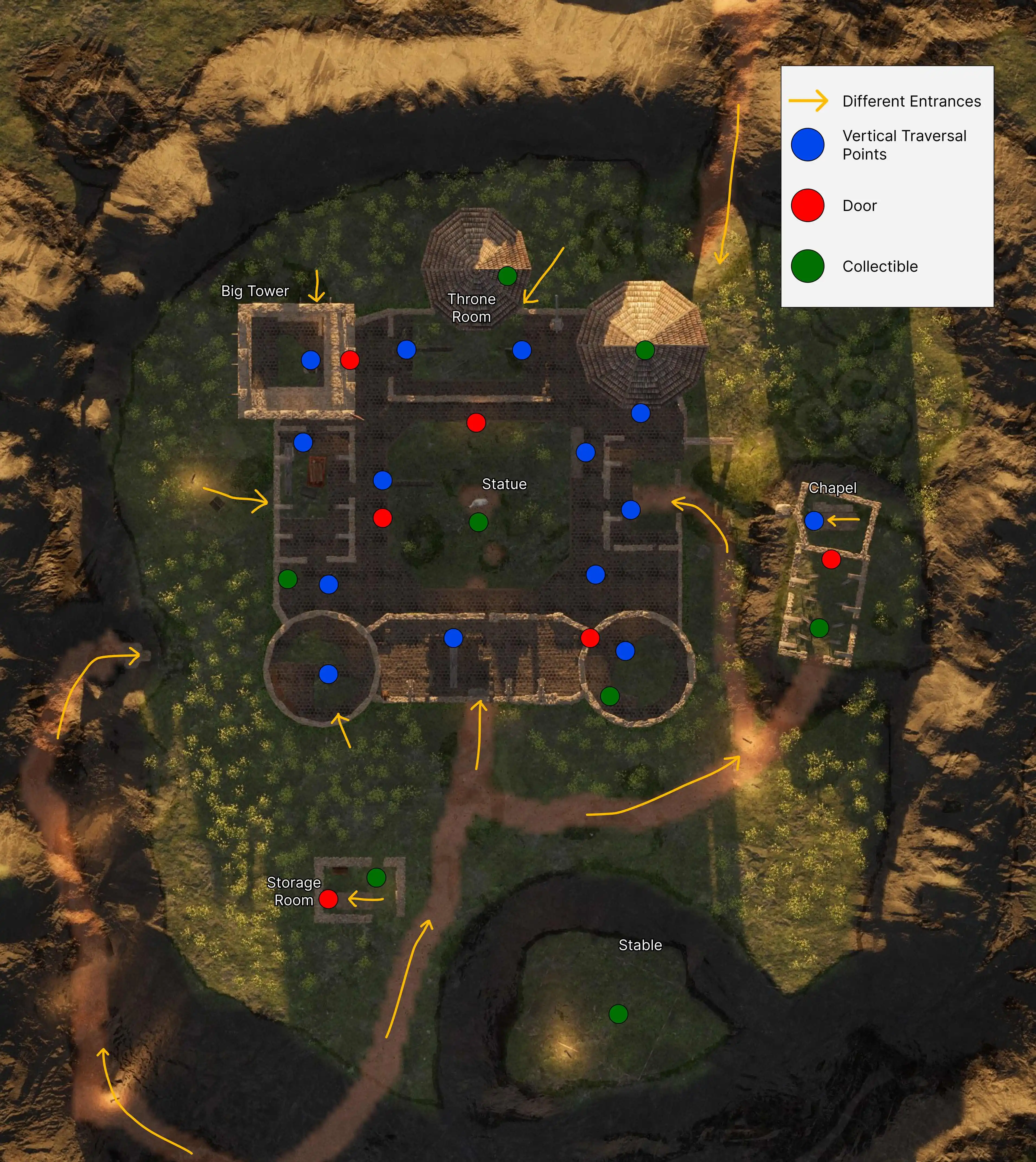
MAP

Aporion VTT - Map

PRE-PRODUCTION

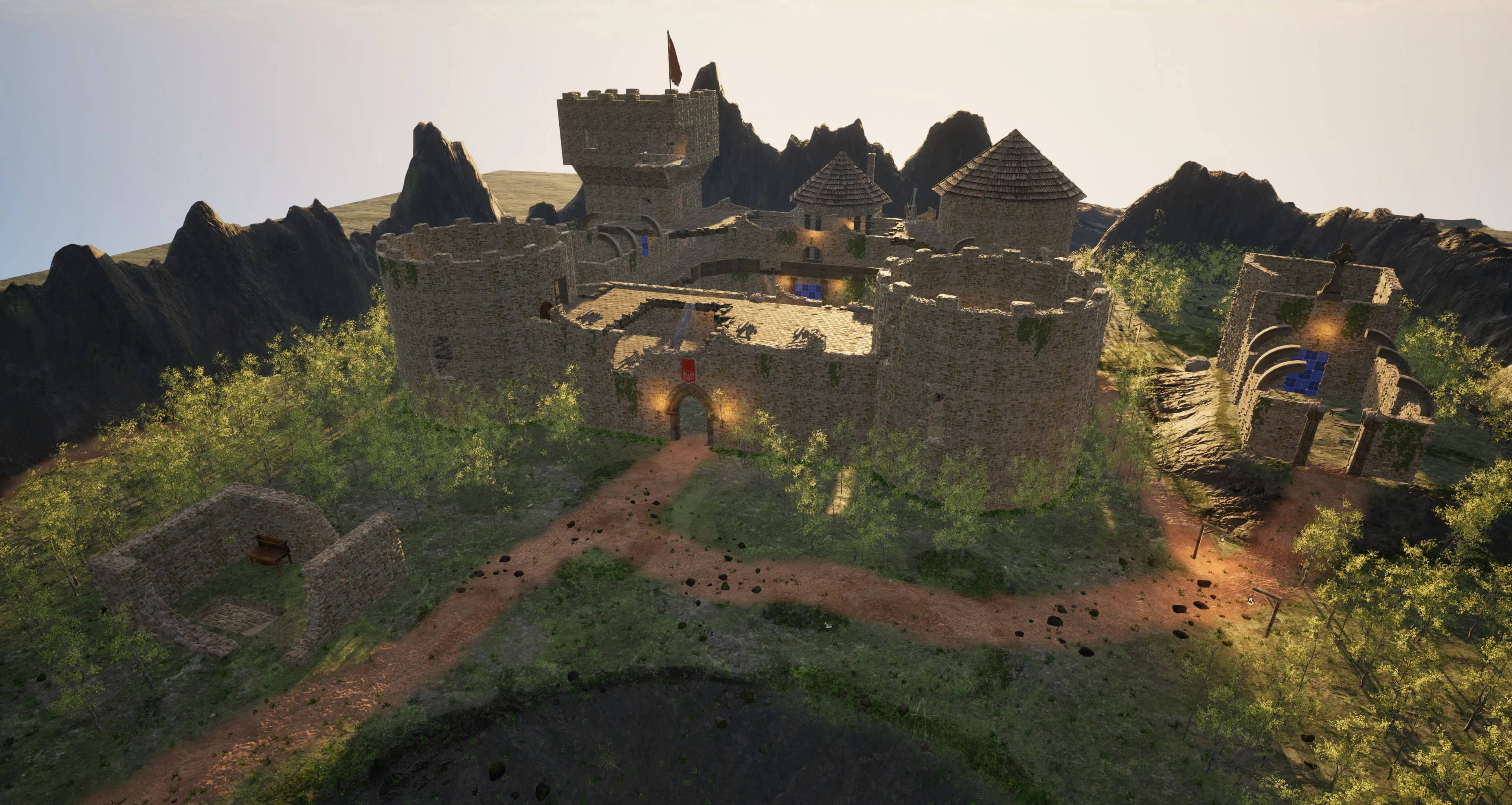
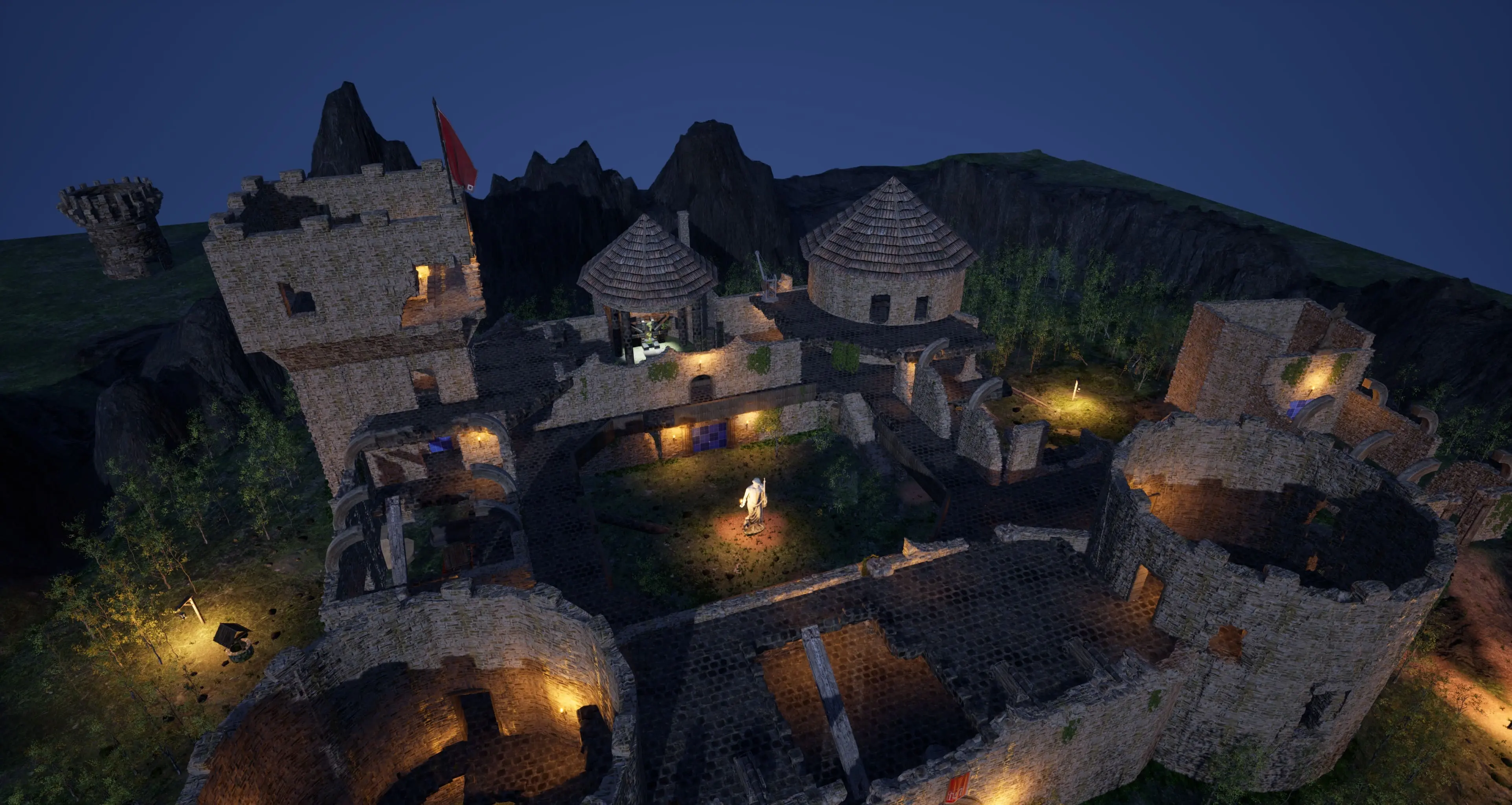
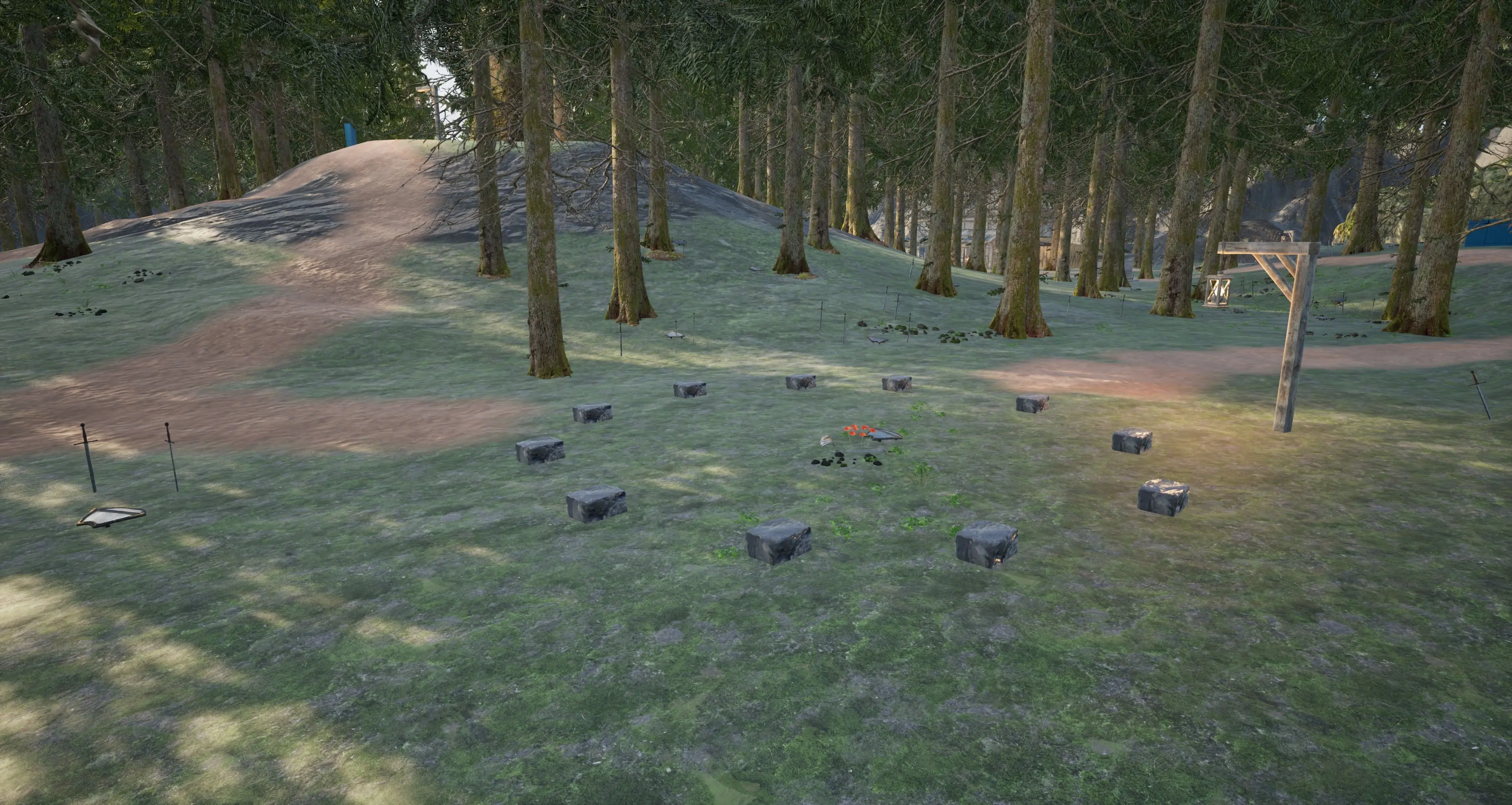
Work on Aporion began right after the project presentation, when I was tasked with designing a new level to integrate into the open world. The goal was to create an area that respected the game’s core pillar: full player agency within a fantasy RPG. The concept focused on two main spaces: a ruined castle and a magical forest. From the start, the priority was both environmental storytelling and spatial clarity. The castle needed to convey a sense of past importance and decay, while the forest had to feel alive and mysterious, encouraging exploration. Compared to my previous work, this level required a stronger open world approach. Instead of a linear structure, I designed a network of interconnected paths, both within the area and in how players could approach it from multiple directions. This ensured a more organic discovery and reinforced player freedom.

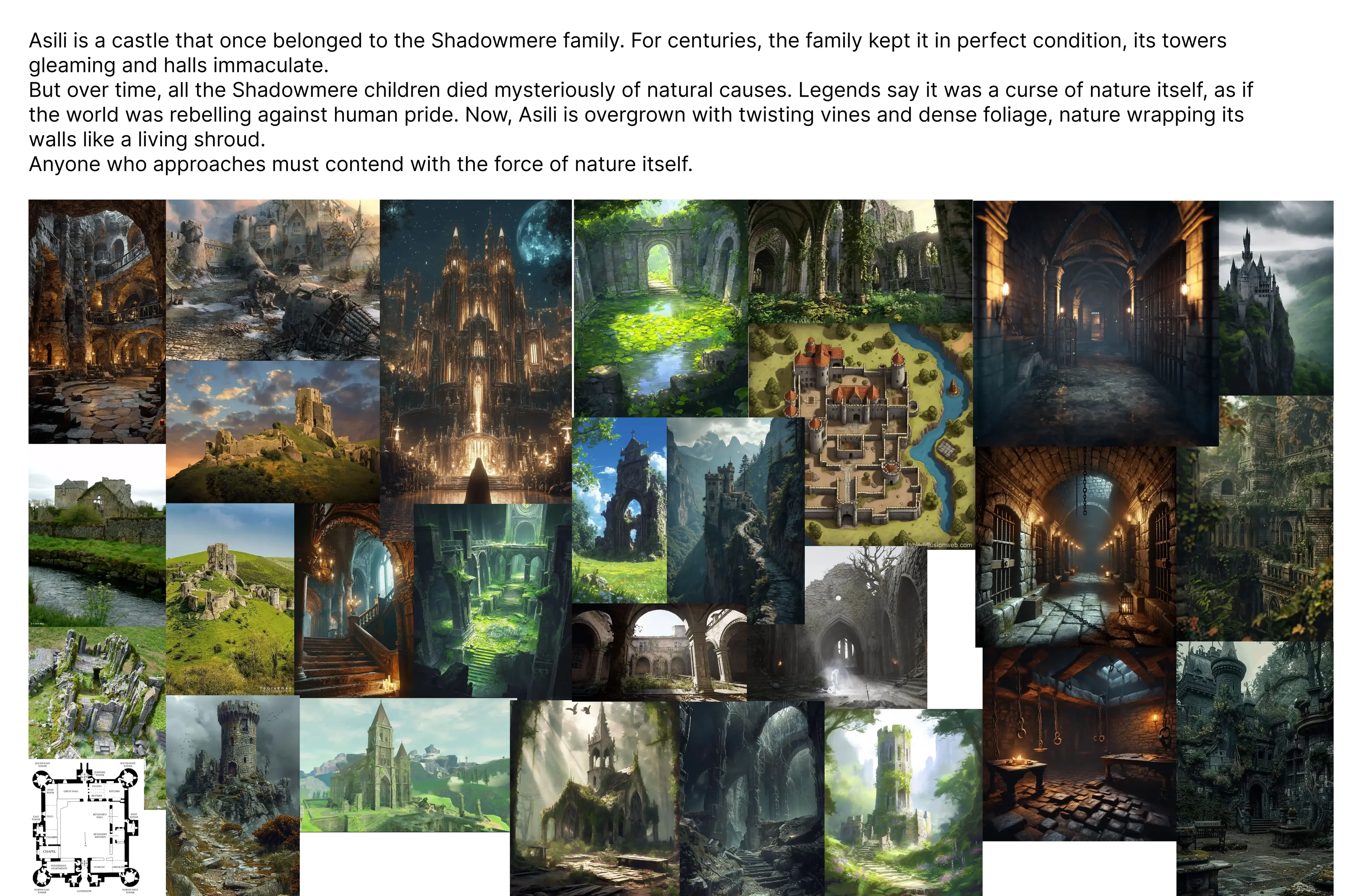
Once defined, I moved into research and ideation, collecting visual and spatial references to establish a coherent direction and organizing them into a structured moodboard. In parallel, I created a pitch document presenting multiple design approaches, exploring different layouts, traversal options, and environmental beats. The main challenge during this phase was the lack of a clearly defined pacing structure. Since the experience is non-linear, each player can approach the area differently, making it difficult to control rhythm and progression. The goal was to shape the space in a way that could support multiple paths while still delivering a coherent and consistent experience. After presenting the pitch to the team, several ideas were discarded. This helped narrow the focus and identify the strongest directions, which became the foundation for the level moving forward.

📄 Open pitch PDF

PRODUCTION

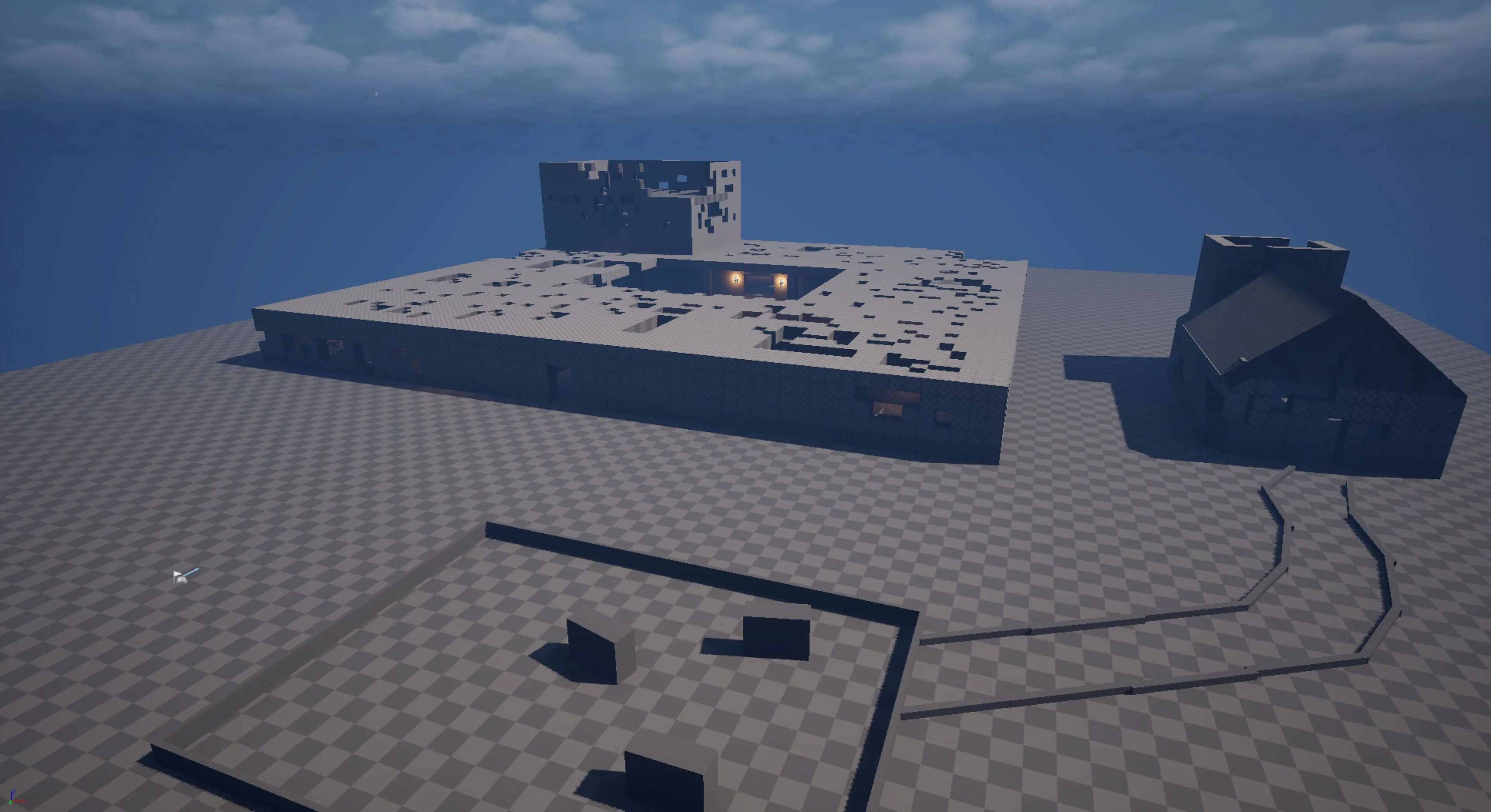
Once the direction was approved, I started by creating a map to define the overall structure of the area. This helped me visualize how to manage the different paths within an open world context, with particular focus on the multiple routes leading to the castle and to the forest. I also used verticality to structure the space into multiple layers, allowing players to approach the same destination from different heights and paths. With the map established, I moved into Unreal Engine 5 and began building the blockout of the designed spaces.

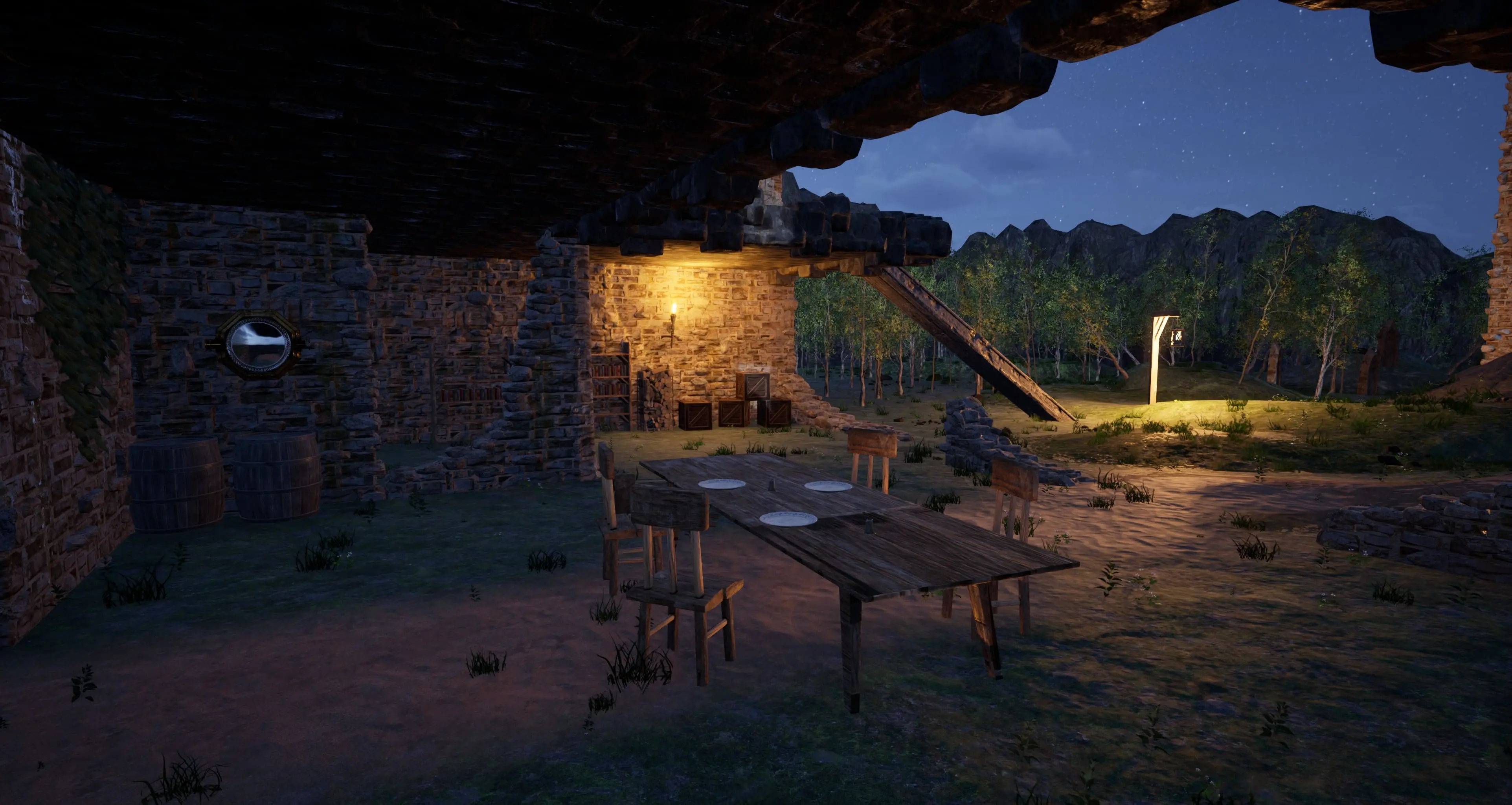
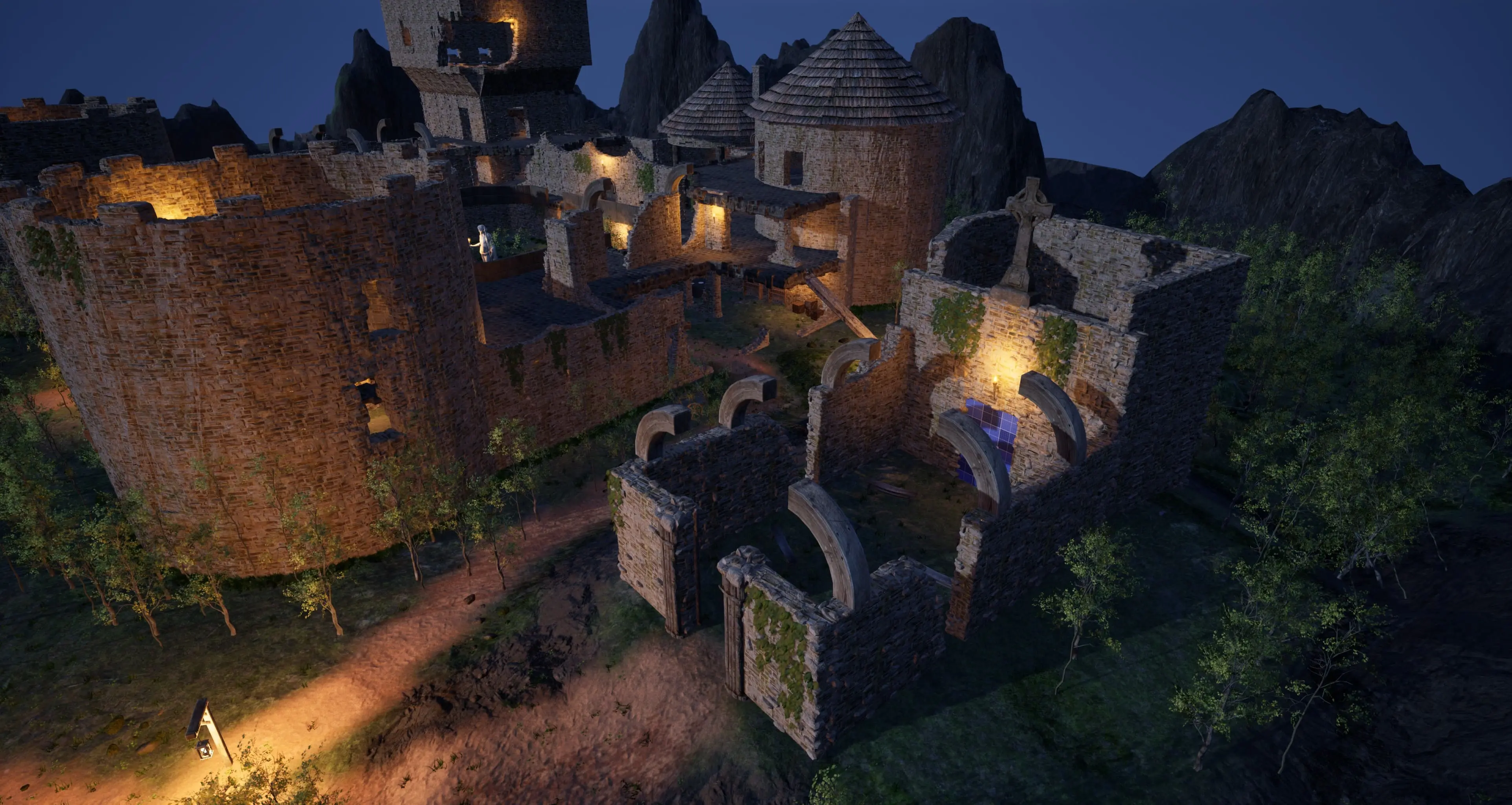
Since the goal was to preserve maximum player agency, I relied on classic level design techniques to guide the player subconsciously, nudging them toward the intended paths without forcing direction. I used torches and lighting to draw attention to specific points and subtly lead navigation, and placed strong landmarks to help orientation. Once the blockout progressed, I moved on to dressing the level and converted it into a Level Instance for integration, paying close attention to optimization throughout the process.

BLUEPRINTS & PCG

Blueprints

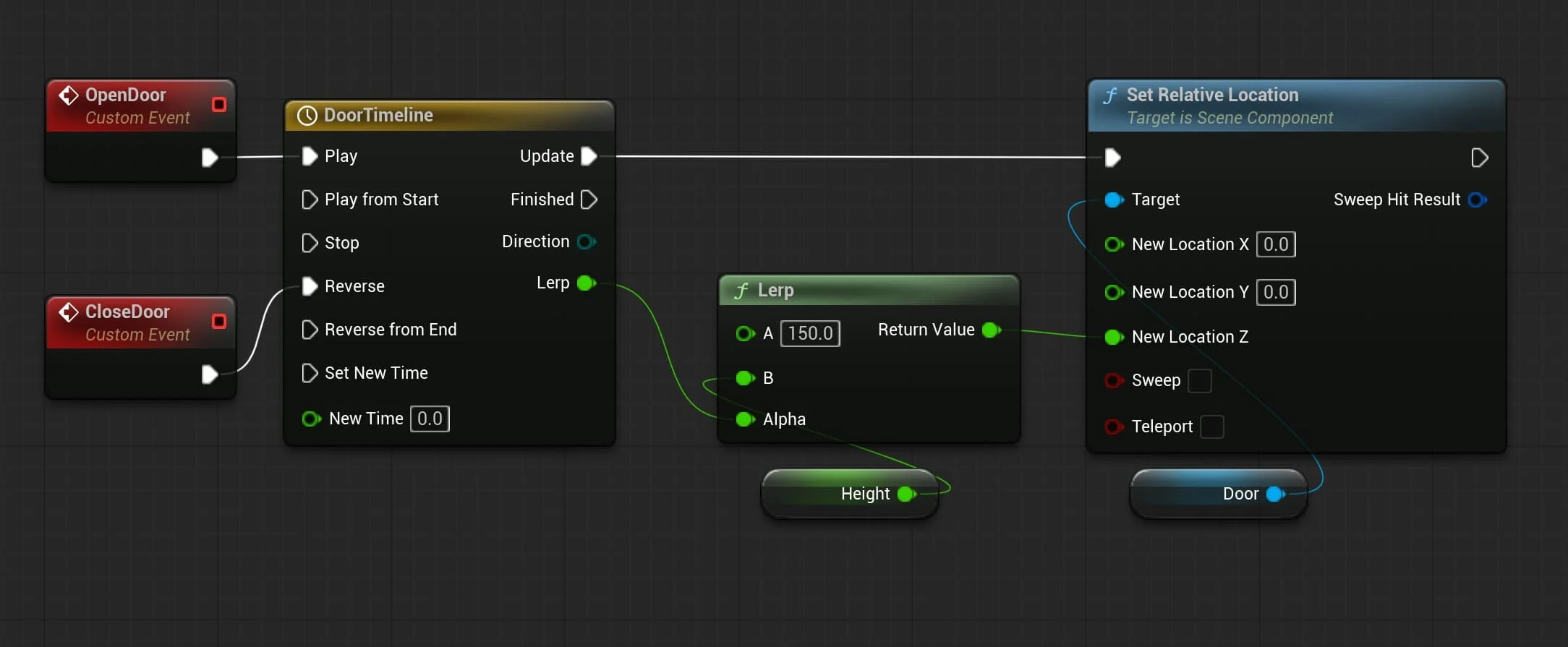
To make the castle more interactive and engaging, I used Blueprint systems to manage its internal interactions. I designed a simple key-and-door system, where players need to collect magical items to unlock specific areas. This allowed me to gate progression without restricting freedom, encouraging exploration by making parts of the castle accessible only after discovering the required items. I also used Blueprints to create small scripted events within the castle, such as torches lighting up when the player passes through certain areas, enhancing feedback and atmosphere.

PCG

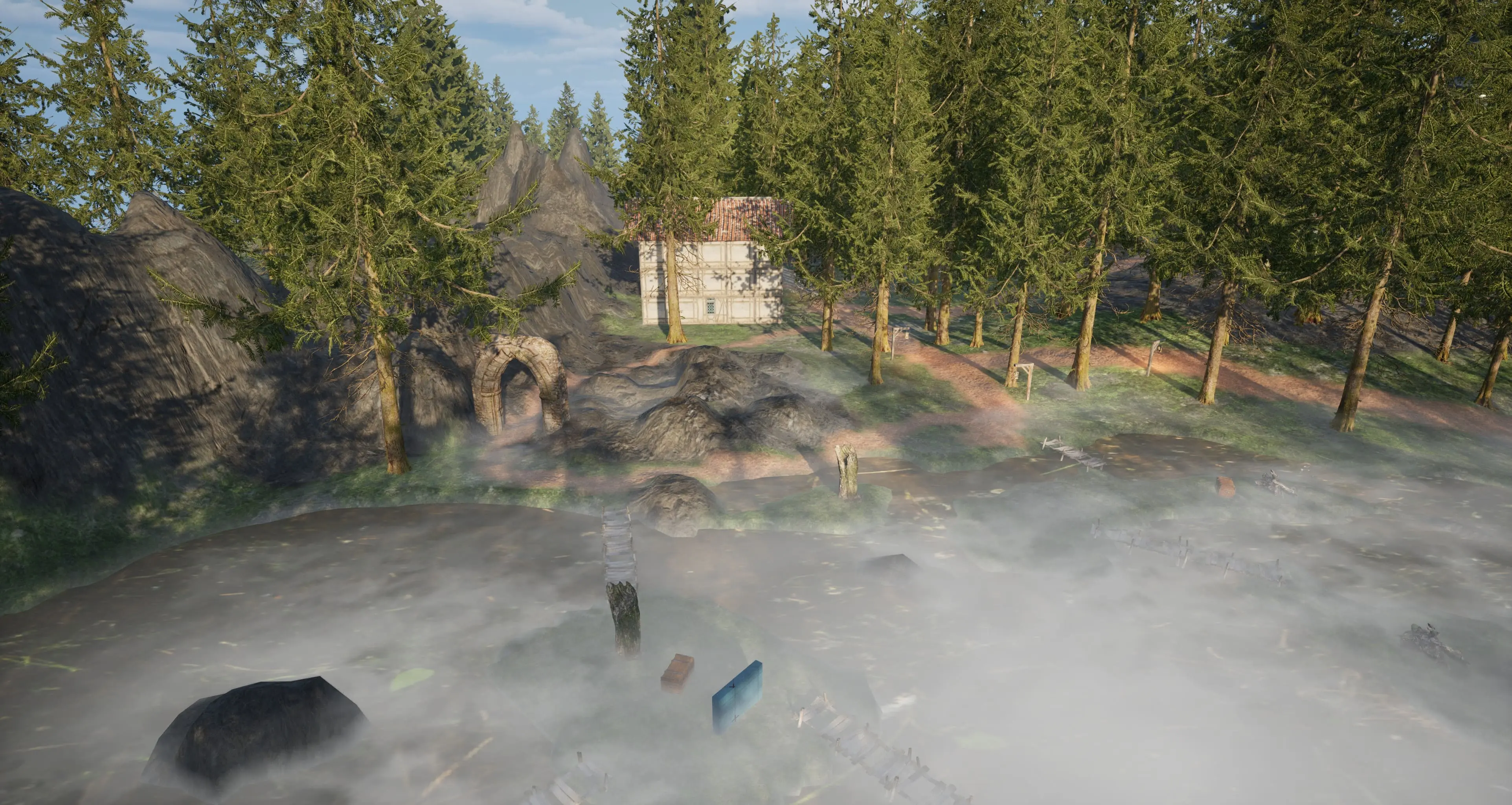
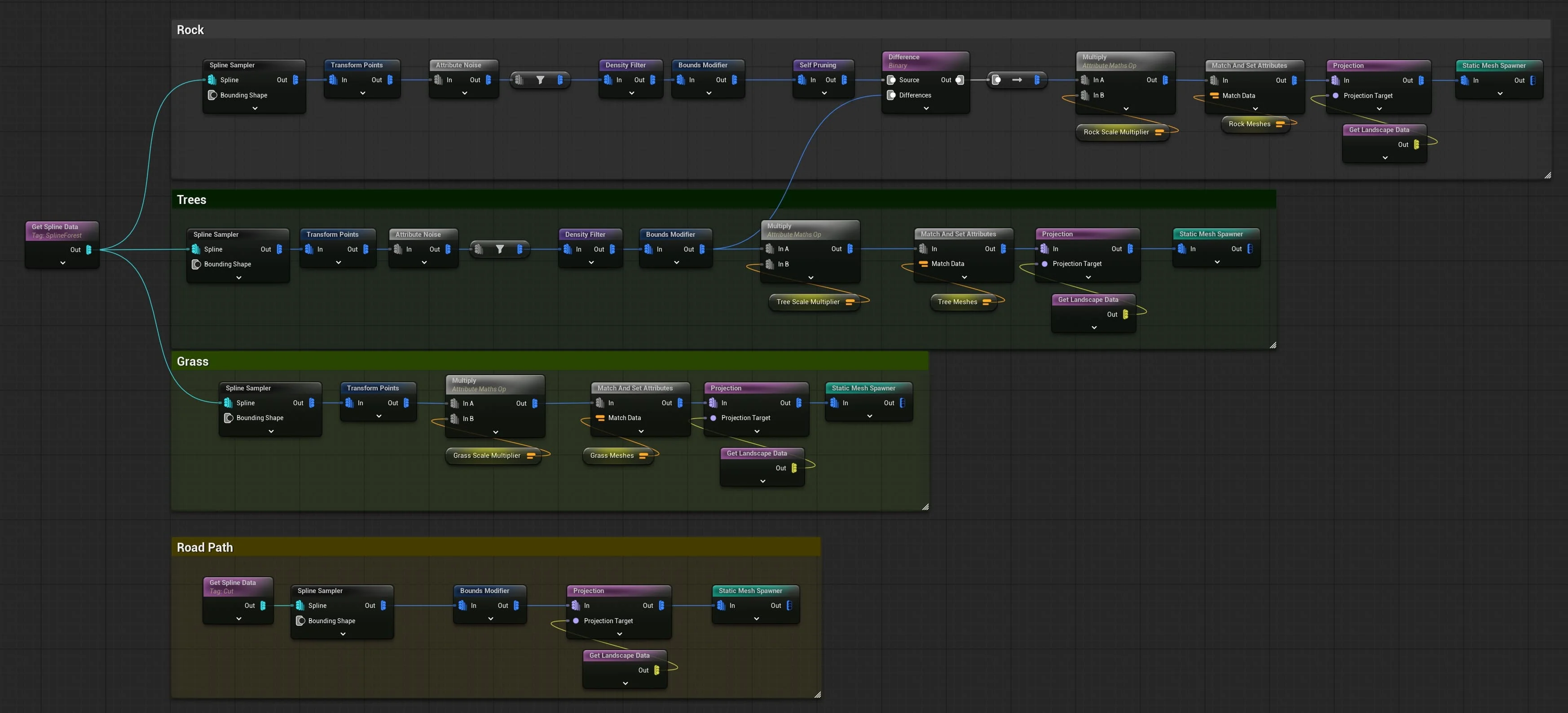
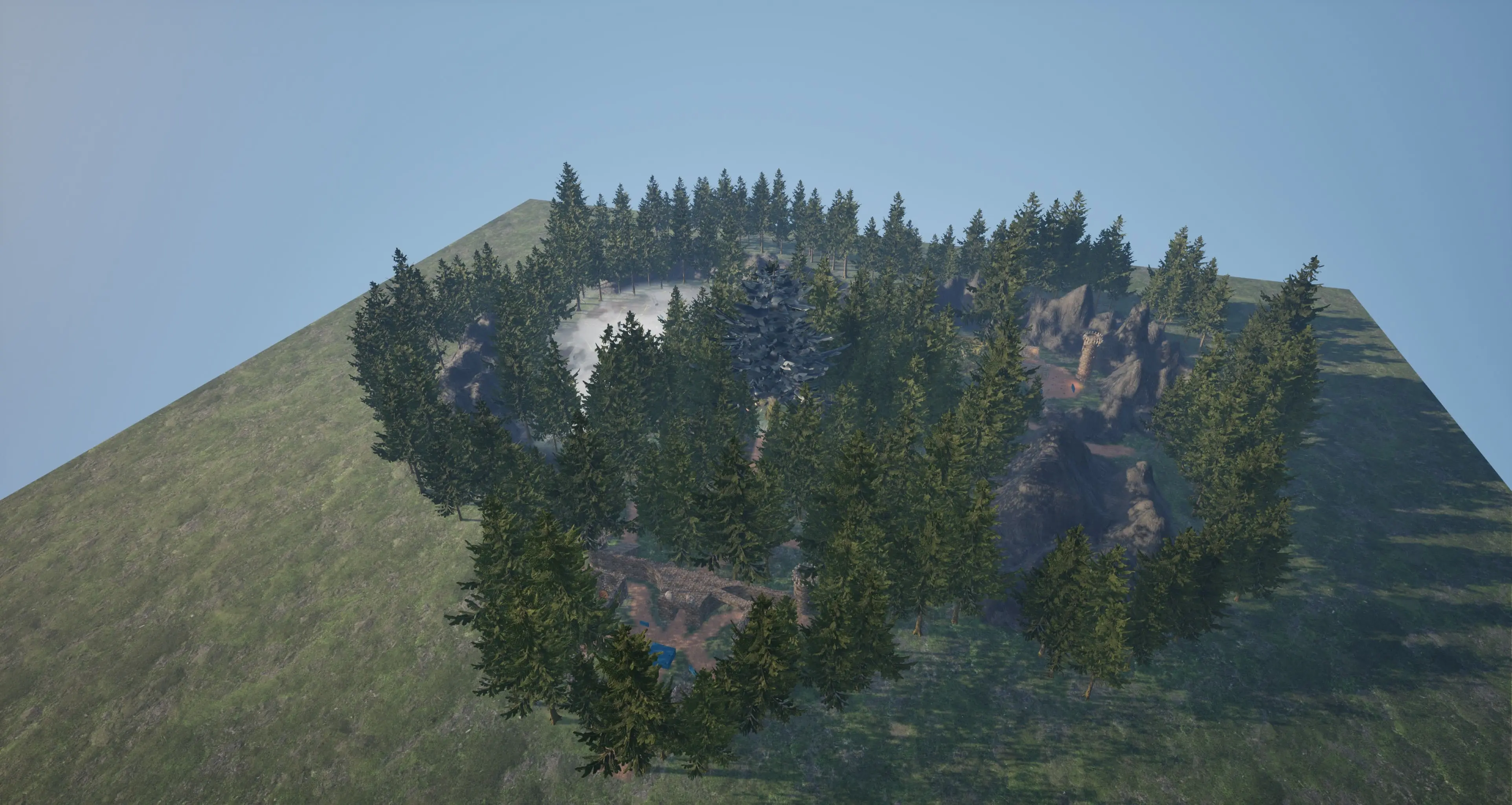
For the forest, I implemented a PCG system to distribute trees, rocks, vegetation, and paths. Instead of building everything manually, I created a modular setup that allowed the area to be generated and expanded efficiently while keeping control over composition and readability. This gave me fast iteration on scale and density, maintaining consistency across the level while supporting open exploration. It was also my first time using PCG in Unreal Engine, and I quickly realized its potential, making it a tool I plan to use in future projects.

ITERATION

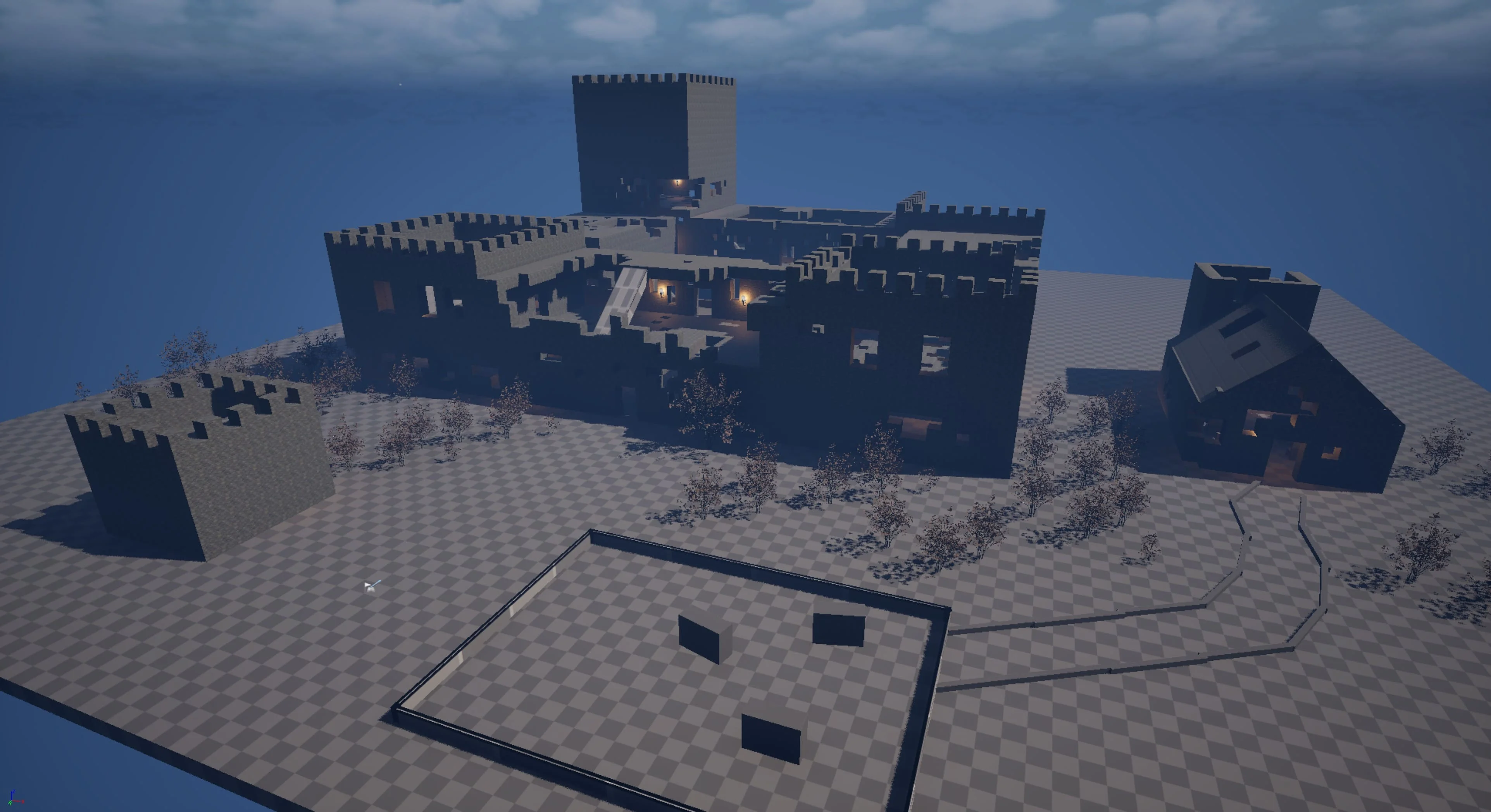
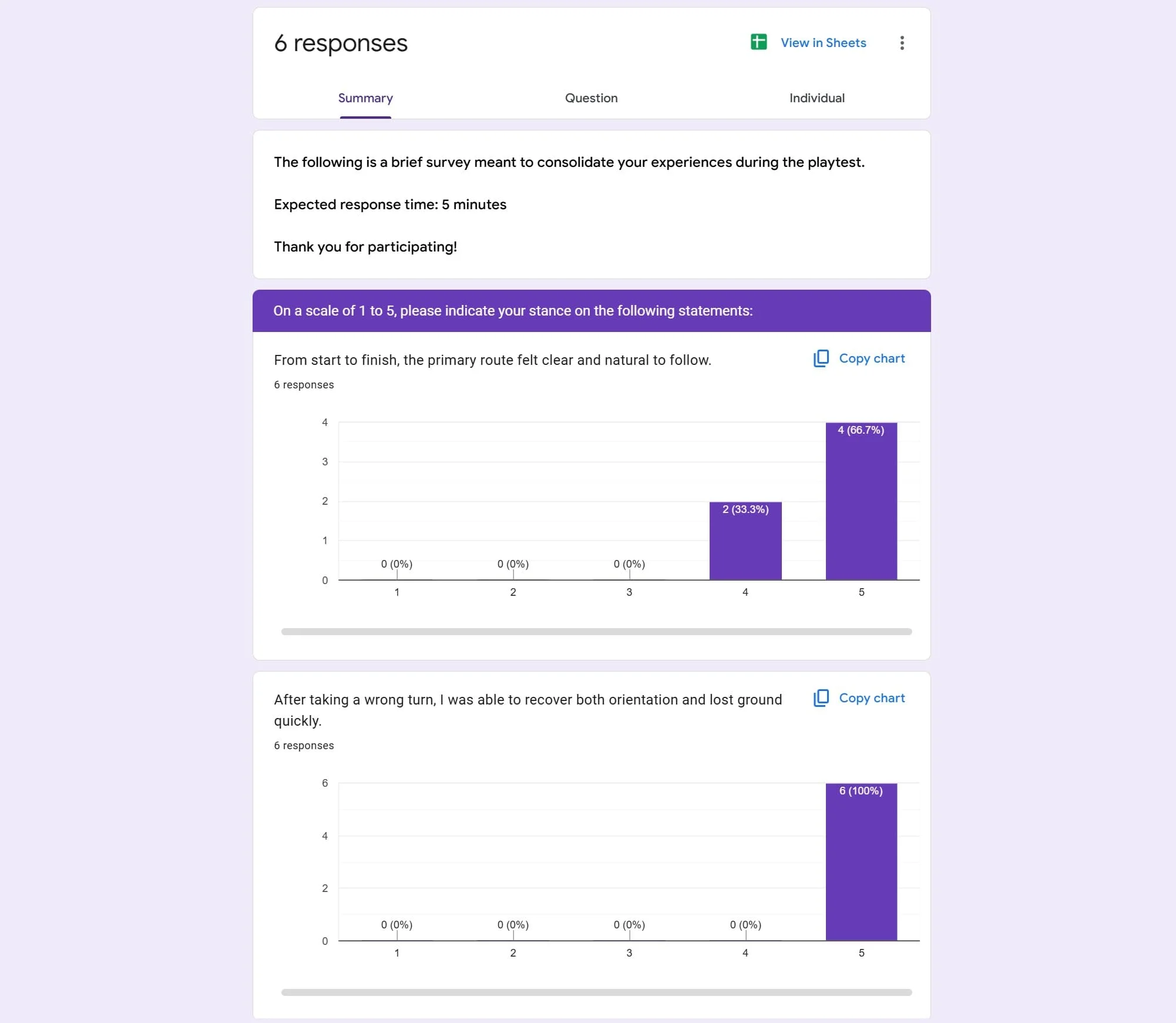
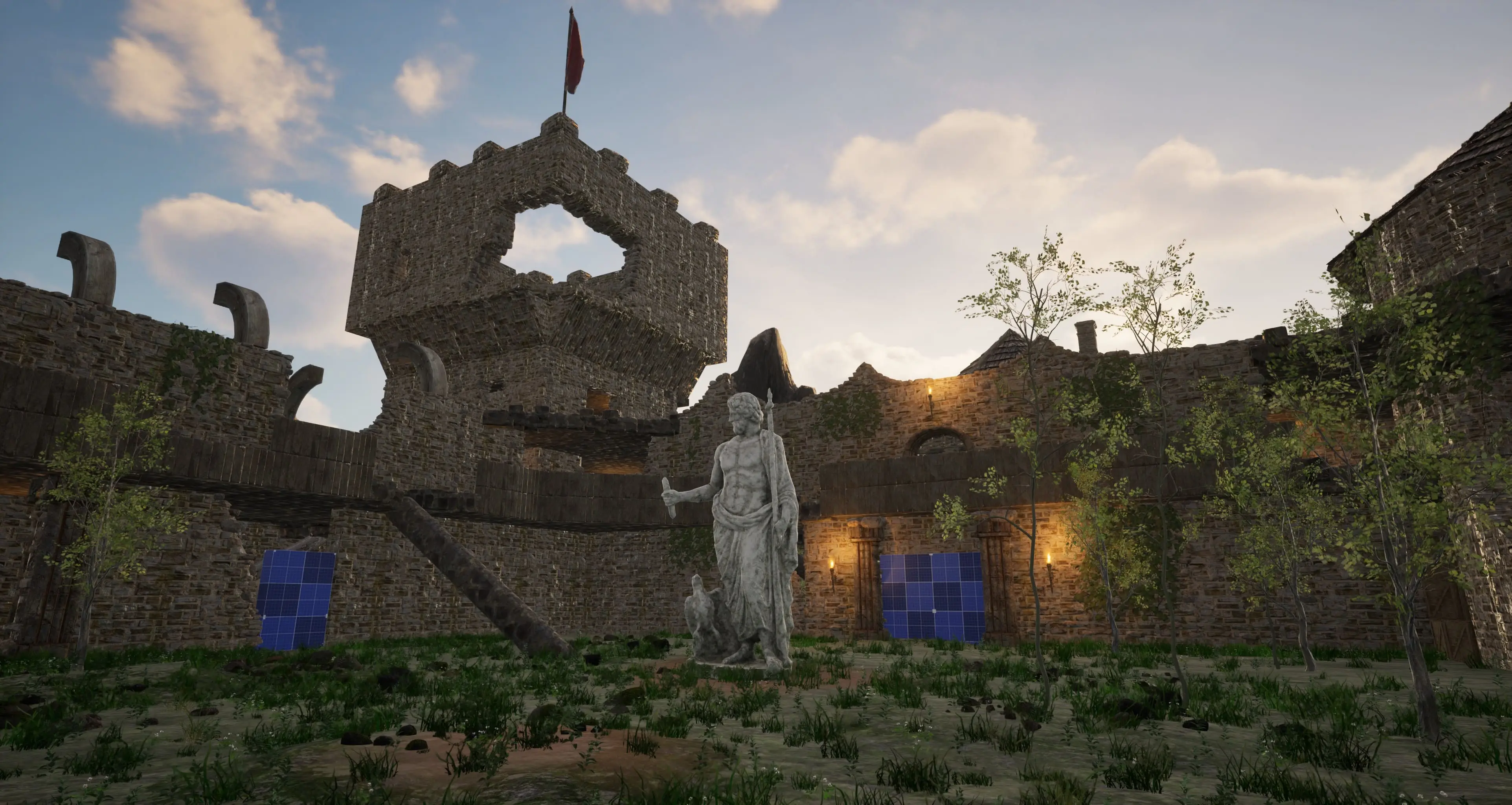
Throughout development, we regularly organized internal playtests to evaluate what was working and what wasn’t. These were self-managed, meaning I had to analyze my own level, prepare targeted questions, and create Google Forms to collect feedback from the team. This process was especially valuable for improving team coordination and learning how to organize and interpret collected data effectively. One of the main issues that emerged during early playtests was the lack of verticality in the castle. The space was mostly limited to a ground floor and a basement, with very few ways to move upward. To address this, I introduced an upper floor and expanded the towers around the level, adding multiple ways to move vertically. I also followed a rule where each room connects to at least 2 to 3 others, ensuring smoother navigation and better flow. This iteration significantly improved the overall readability and flow of the level, elevating the quality of the entire area.

Iteration - Before Iteration - After
User Survey Data

POST-MORTEM

This was by far the most complex but also the most enjoyable group project I’ve done. It taught me how to design a level within a larger open world while giving the player full agency. Working daily with the team improved my collaboration skills and showed me how professional development works beyond school projects. Keeping track of daily tasks proved useful for both personal organization and team updates.

In terms of what I could have done better, I could have spent less time identifying and correcting level issues, and I could have added more interactable objects throughout the area. These are minor points, but valuable lessons I’ll carry forward into future projects.