🧭 Pre-production 🏗️ Production 🔄 Iteration 📊 Post-mortem

NEX TEMPORIS

First Person Puzzle - Unity

Overview

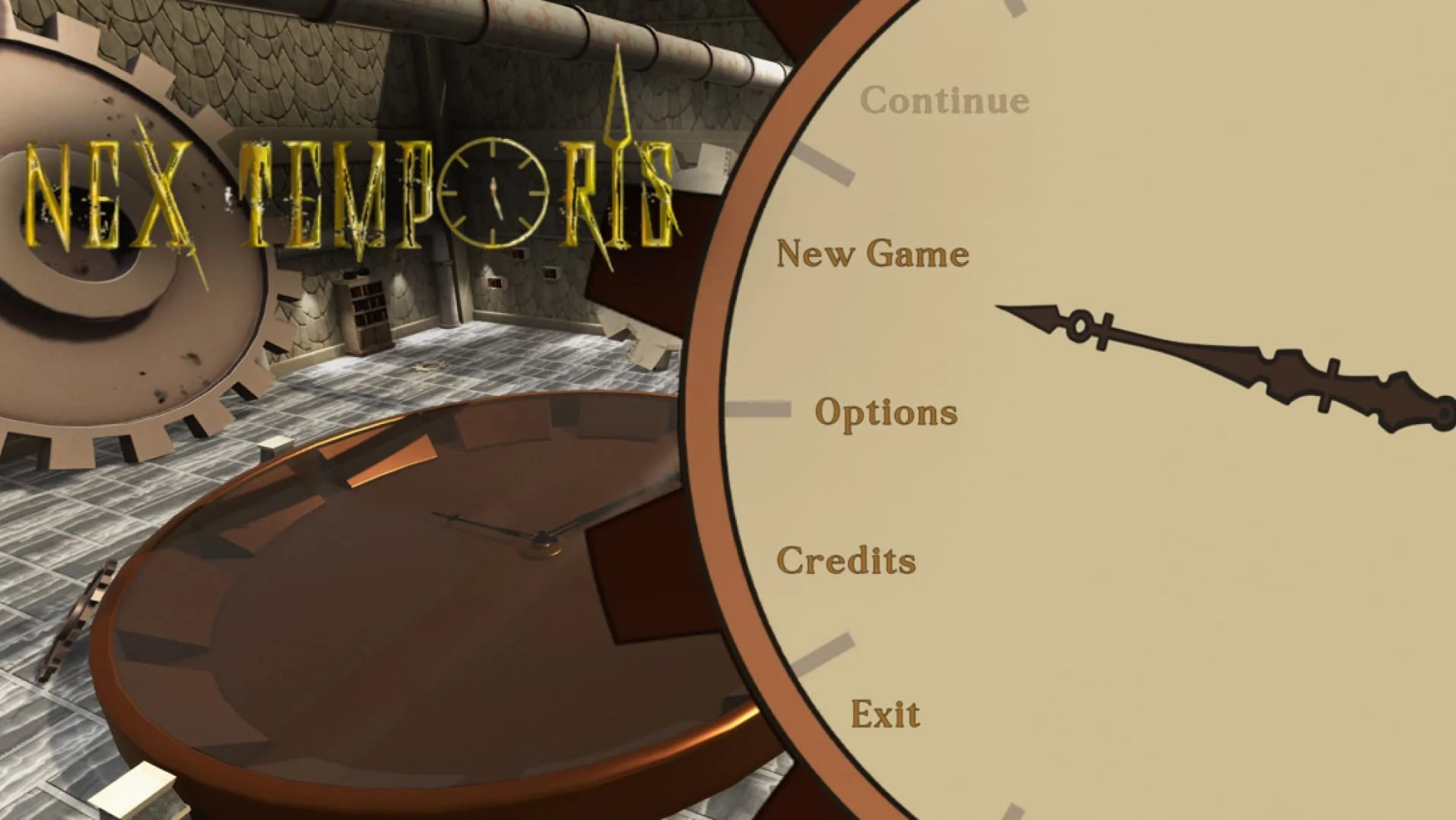
First person puzzle game that revolves around time. Step into the shoes of a watchmaker: explore the map, search for gears, pointers and manipulate time to repair all the clocks.

Goals

Design puzzle spaces that integrate time manipulation mechanics into the environment and narrative while maintaining clear readability and smooth flow.

Role

Level Designer & UI/UX Designer

Engine

  • Unity

Project duration

2 months

Team & Production

Academic Team Project at DBGA dbgameacademy.it Digital Bros Game Academy Opens in a new tab

TRAILER

PRE-PRODUCTION

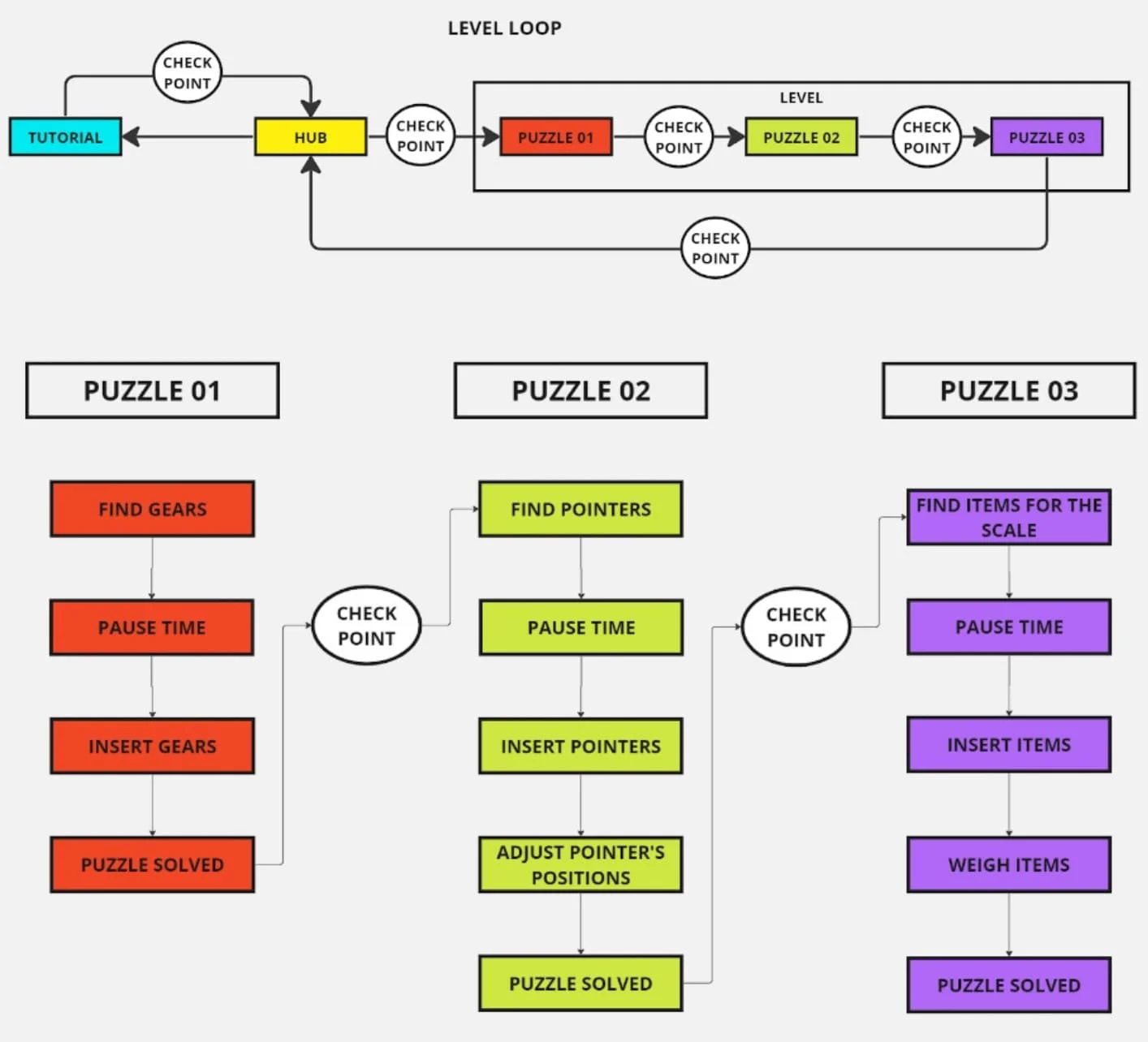
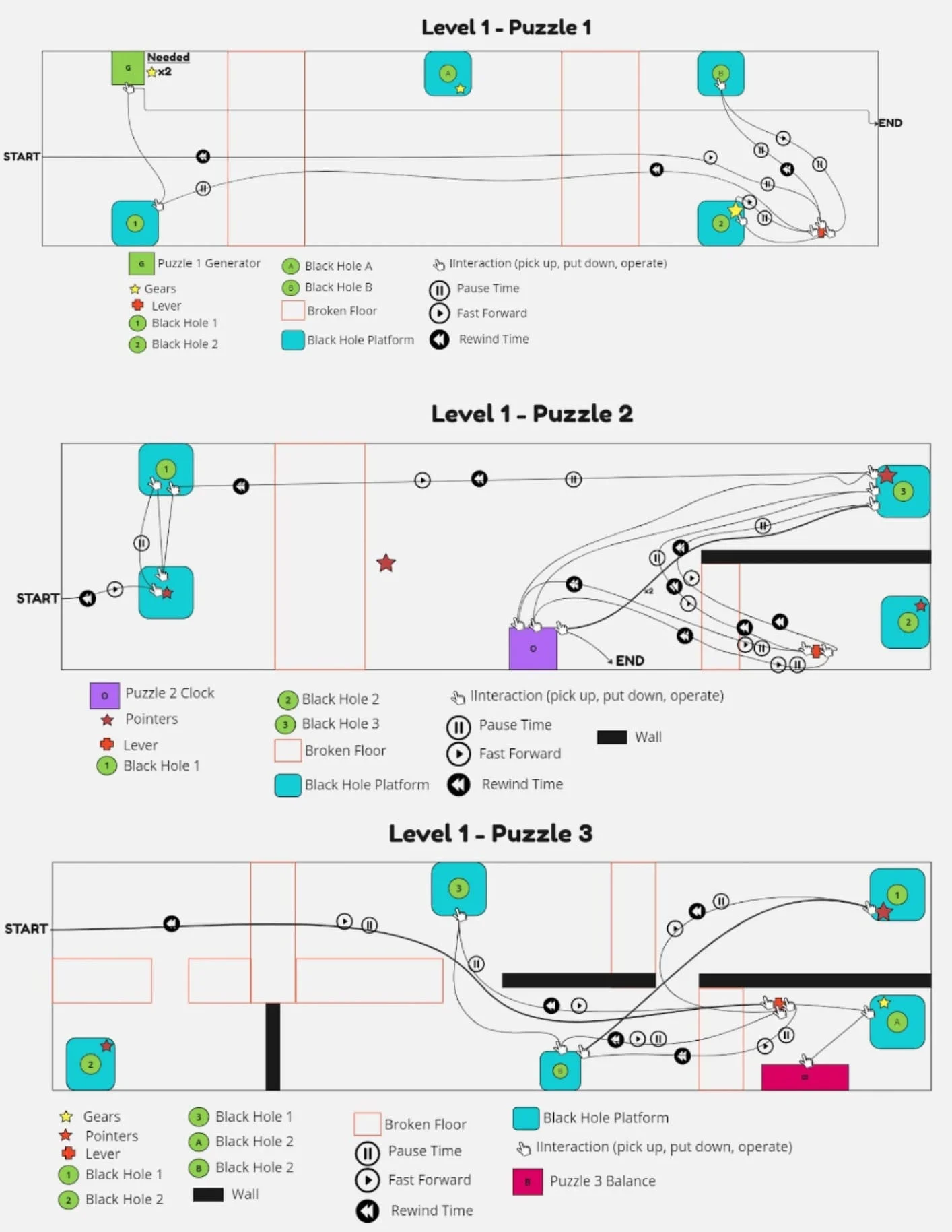
This 2-month project focused on developing a First Person Puzzle Game in Unity, with the constraint of integrating a watchmaker theme. Since the team had limited experience with the genre, I pushed for reference analysis from Portal and The Talos Principle, defining a direction based on environmental puzzles and time manipulation, while also prototyping multiple gameplay ideas early on to test interactions and validate the core experience. The final direction focused on time control, allowing players to rewind, fast forward, or stop time, with puzzles built around these mechanics and tightly integrated into the level structure. The main challenge was ensuring that puzzles felt natural within the environment, supporting a smooth and coherent gameplay flow.

PRODUCTION

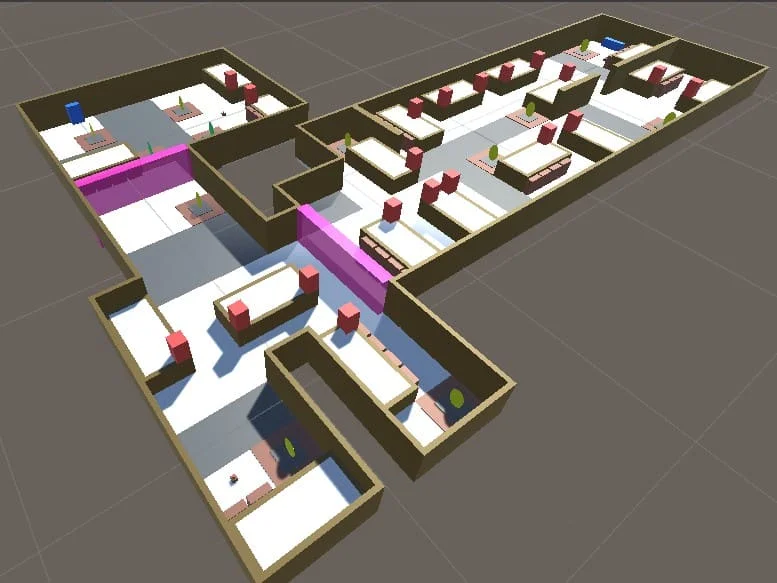
I worked on Level Design and UI/UX, contributing to both gameplay and player experience. My focus was on blockout creation and puzzle implementation, designing levels directly in-engine and iterating on spatial layout to support puzzle readability and flow. I designed and implemented environmental puzzles, ensuring they were intuitive while still engaging, while also developing UI wireframes with a clean and minimal approach, prioritizing clarity and ease of navigation. Lighting played a key role in guiding the player, with each level structured to use light as a subtle navigation tool. Throughout the process, I worked closely with programmers and artists to translate my mockups into final in-engine implementations, ensuring consistency between design and execution.

ITERATION

As development progressed, issues emerged with level scale and verticality. Spaces felt too large and disconnected, leading to excessive backtracking and breaking gameplay flow. To solve this, we introduced mechanics to improve traversal and interaction. Black holes allowed faster object transportation across the map, while time-manipulated bookshelves enabled vertical movement by transforming into climbable structures. These solutions helped reduce friction, improving pacing and making puzzle navigation more fluid and intuitive.

POST-MORTEM

This project was my first extensive in-engine group experience using Unity, and a key step in understanding collaborative workflows. It strengthened my skills in level implementation, lighting, and UI design, while improving my ability to align design decisions with team goals. In hindsight, I could have pushed further on puzzle variety and spatial depth, exploring more complex interactions between mechanics and level layout to create more layered gameplay scenarios.