๐Ÿ“‹ Overview ๐ŸŽฎ Gameplay ๐Ÿงฉ Level Beats ๐Ÿ—๏ธ Level Structure ๐Ÿ›๏ธ Environmental Storytelling ๐Ÿง  Level Design Techniques โœ“ Conclusion

A PLAGUE TALE: REQUIEM

Level Analysis

OVERVIEW

A Plague Tale: Requiem is a narrative-driven action adventure game developed by Asobo Studioasobostudio.comAsobo StudioOpens in a new tab where level design supports stealth, exploration, puzzles, and combat with a strong focus on environmental storytelling and progression through hostile, rat-infested spaces.

I chose A Plague Tale: Requiem to study how gameplay systems like stealth, light and darkness, and enemy behavior are integrated into level design while maintaining narrative pacing and immersion.

This analysis focuses on system driven design, layout, environmental storytelling, and player guidance through space, lighting, and composition, with the goal of understanding how the game balances freedom, control, and storytelling.

GAMEPLAY

The gameplay revolves around the duality of light and darkness: light protects from rats and shapes navigation, while darkness creates constant threat. New tools expand player choice and deepen this system, with sling, alchemy, and crossbow interacting to turn the environment into a tactical resource.

Compared to Innocence, Requiem adopts a more system-based design philosophy. Rather than relying on predefined solutions, encounters are built around interconnected mechanics that can be combined in different ways, encouraging experimentation, adaptation, and player-driven problem solving.

Stealth is the core system around which most encounters are built. Amicia moves through spaces by crouching, crawling, and using tall grass or environmental cover to avoid detection, while managing both her own visibility and Hugo's. Enemies follow patrol routes and react to sound, movement, and light, verbalizing their intentions in real time to give the player readable behavioral cues. Detection is gradual, offering a brief window to break line of sight before triggering a full alert.

MECHANICS

RESOURCES & PLAYER PROGRESSION

Unlike Innocence, rocks are now infinite, removing basic ammo constraints and encouraging experimentation. Combined with alchemy and resource management, this expands player agency, allowing crafted tools to interact with enemies and the environment while reinforcing the light and darkness system. Resources can also be spent at workbenches to upgrade Amiciaโ€™s equipment.

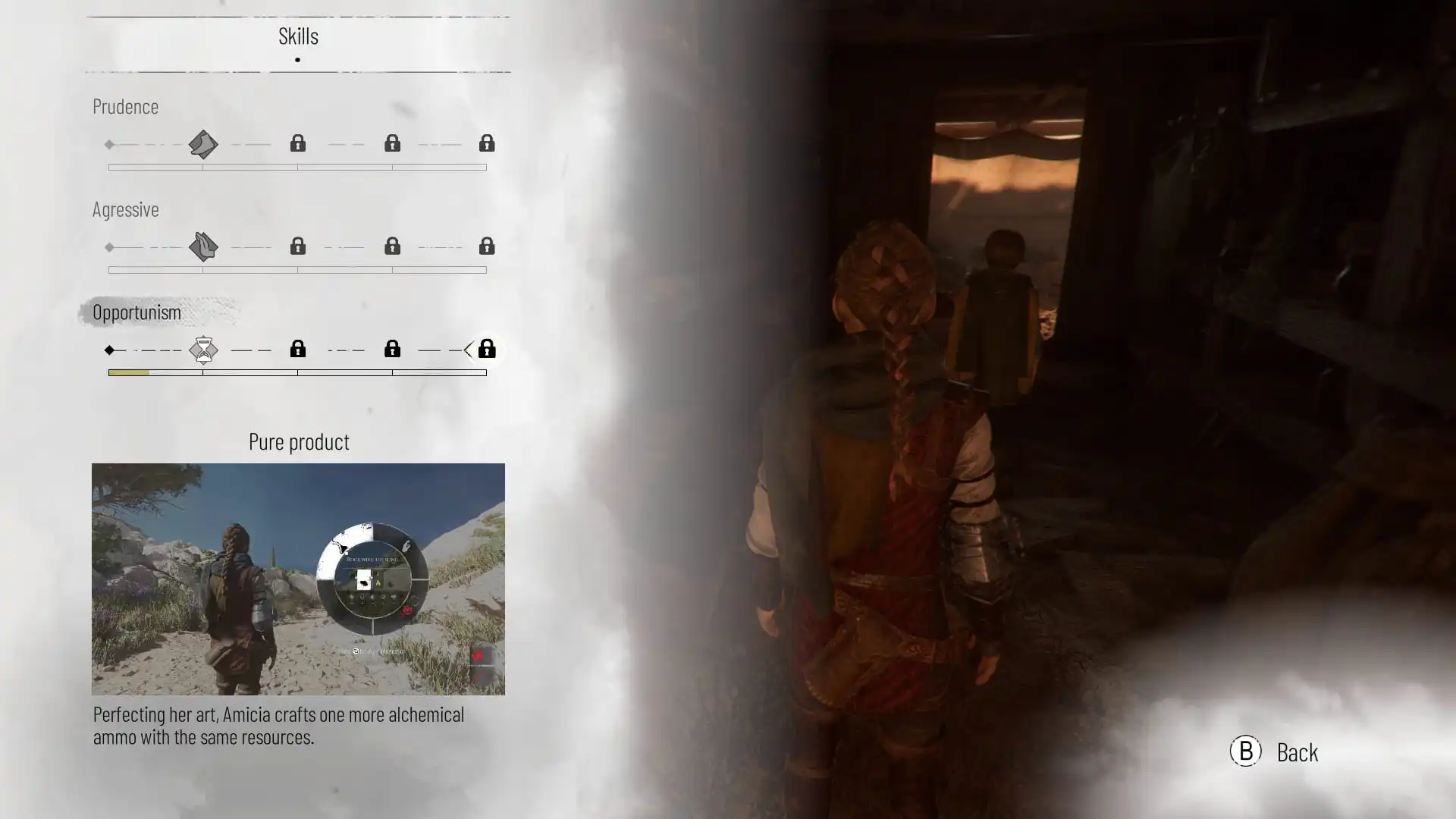
Progression is handled through a system based on player actions, primarily the number of enemies defeated, which automatically upgrades certain abilities without a traditional skill tree. Mechanics are not all available from the start but are gradually unlocked to reinforce a sense of progression across stealth and combat.

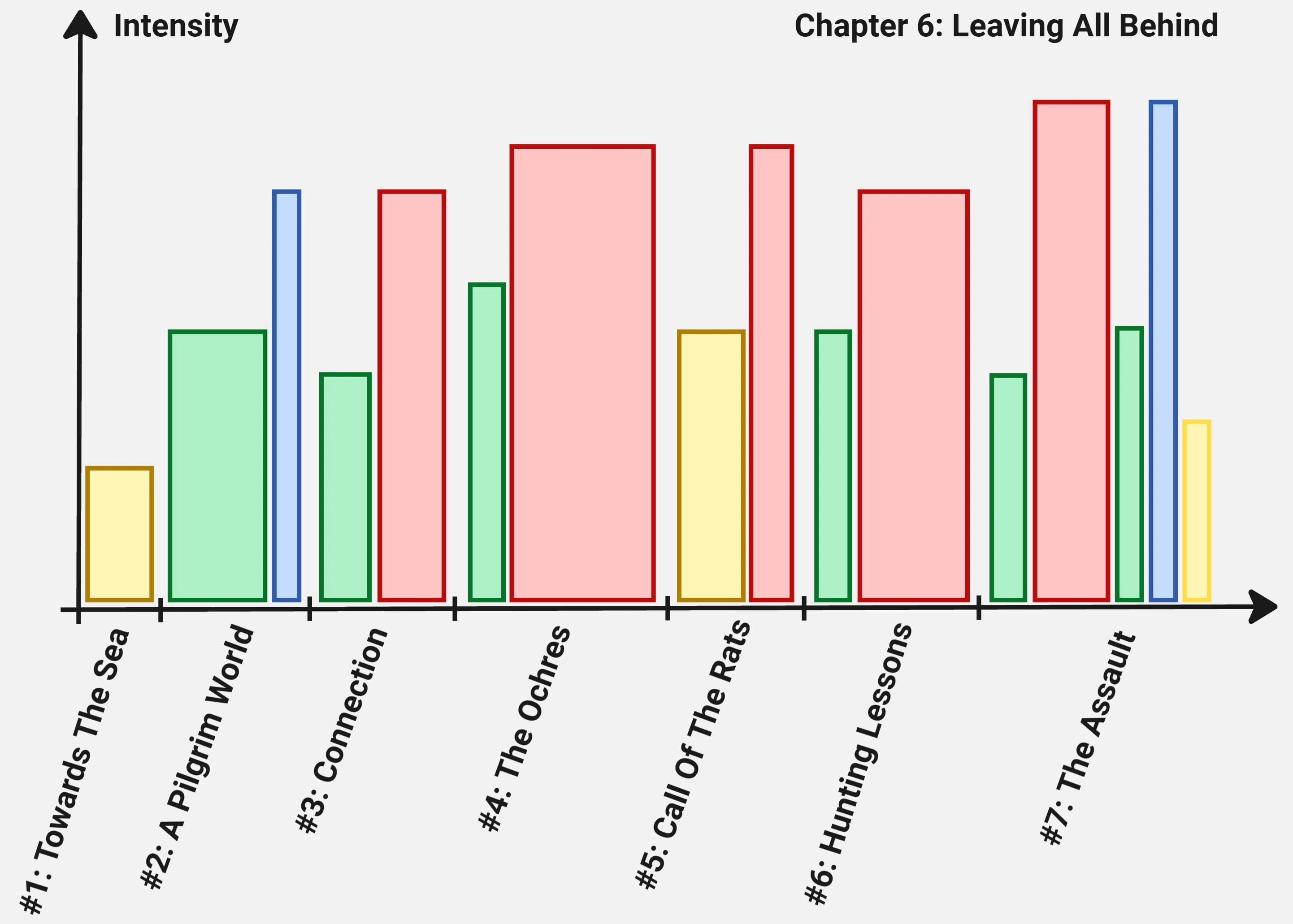
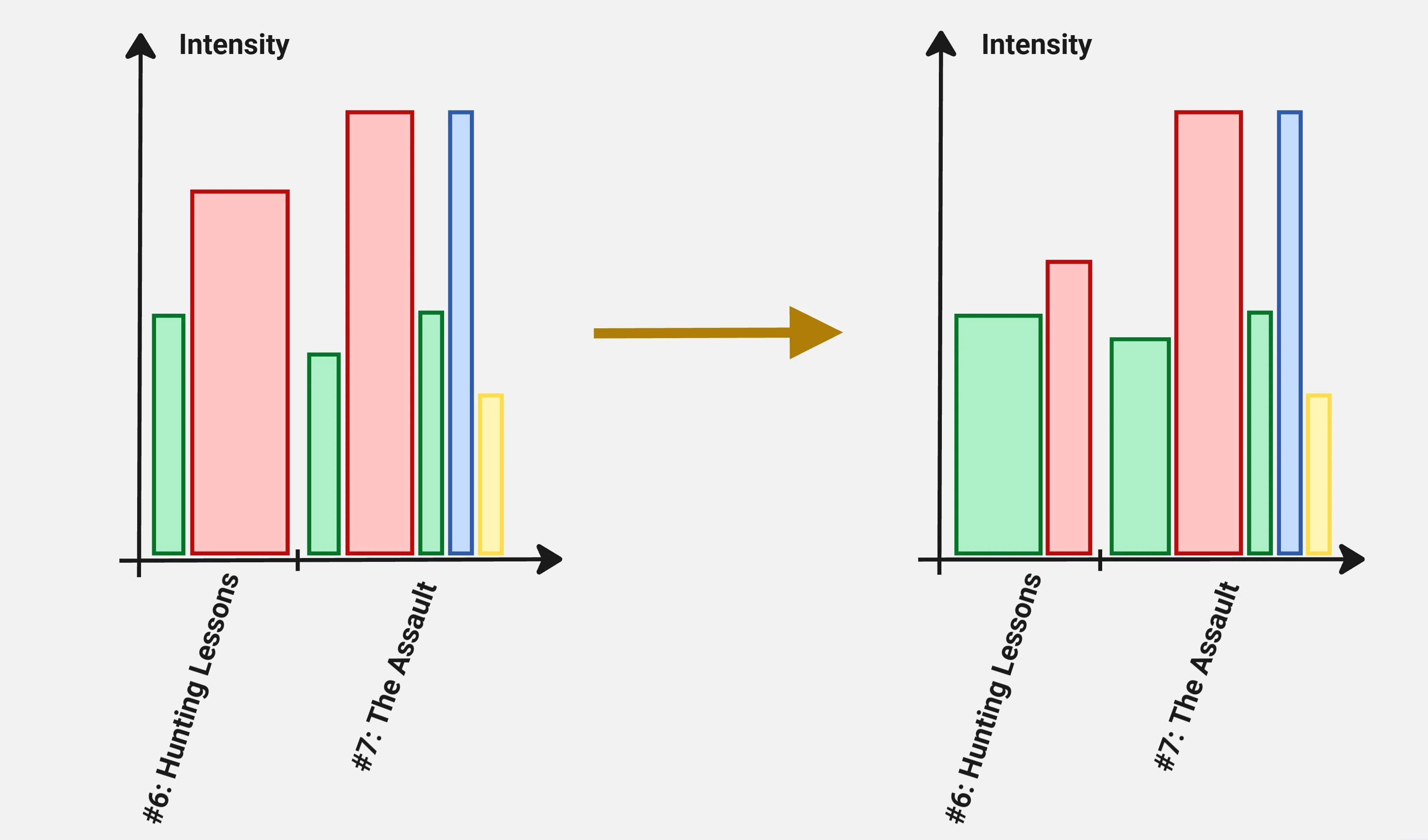
Pacing graph โ€” beats and progression intensity

LEVEL BEATS

The game is structured around a series of gameplay beats that balance tension, exploration, and narrative. These beats guide the player through stealth, combat, and puzzles, shaping pacing and engagement while letting the player discover solutions naturally. These beats include:

EXPLORATION

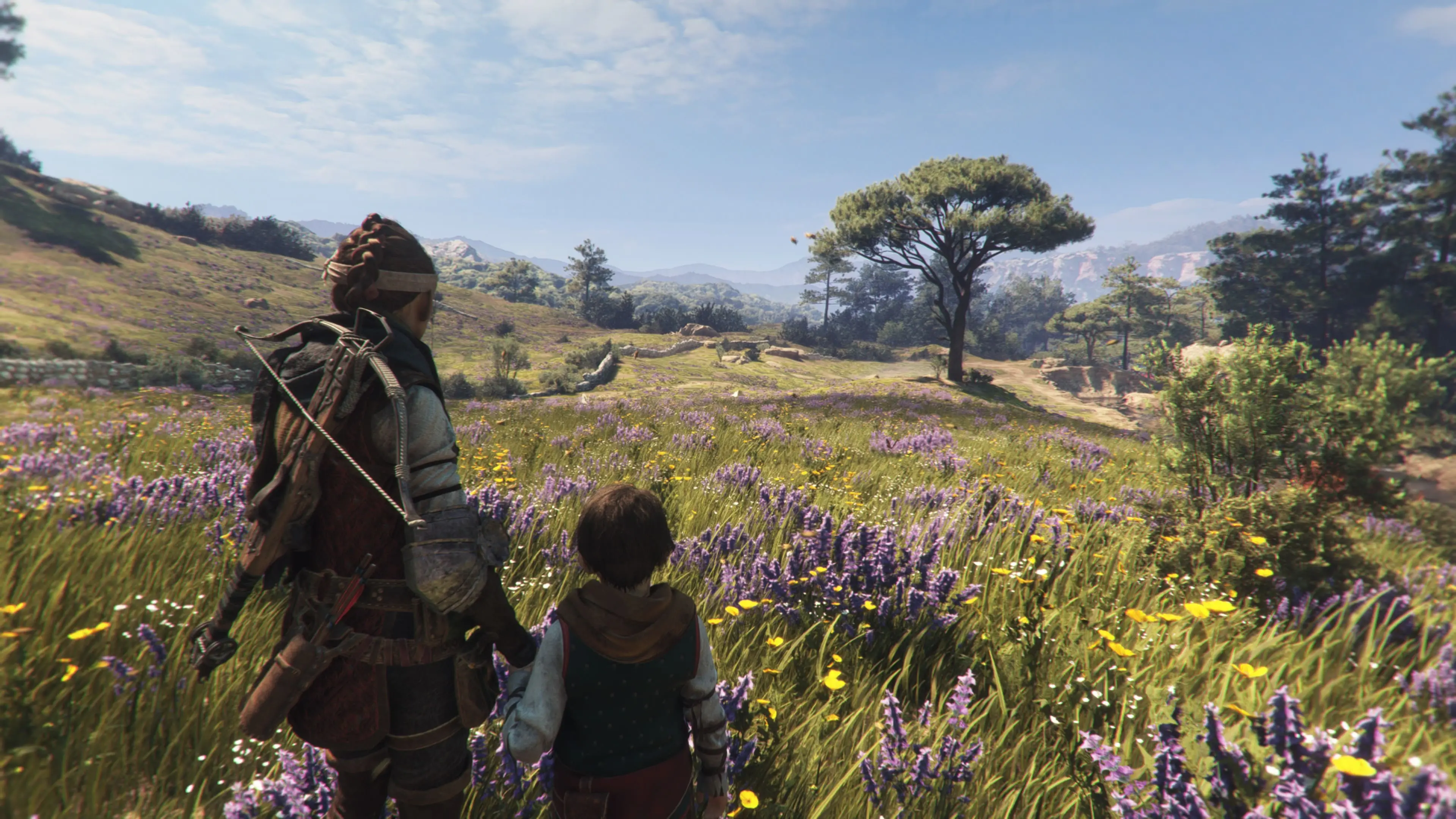
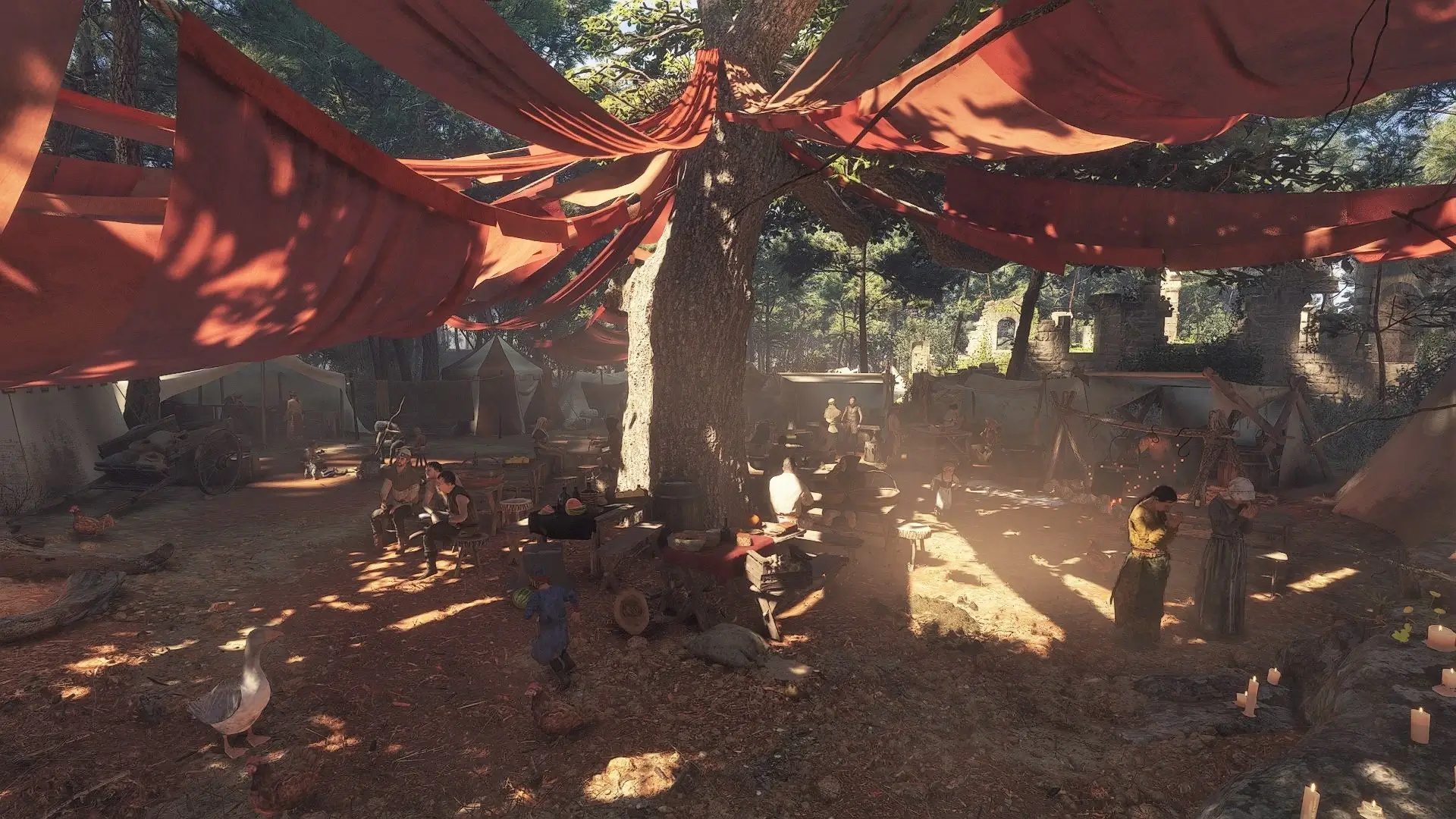
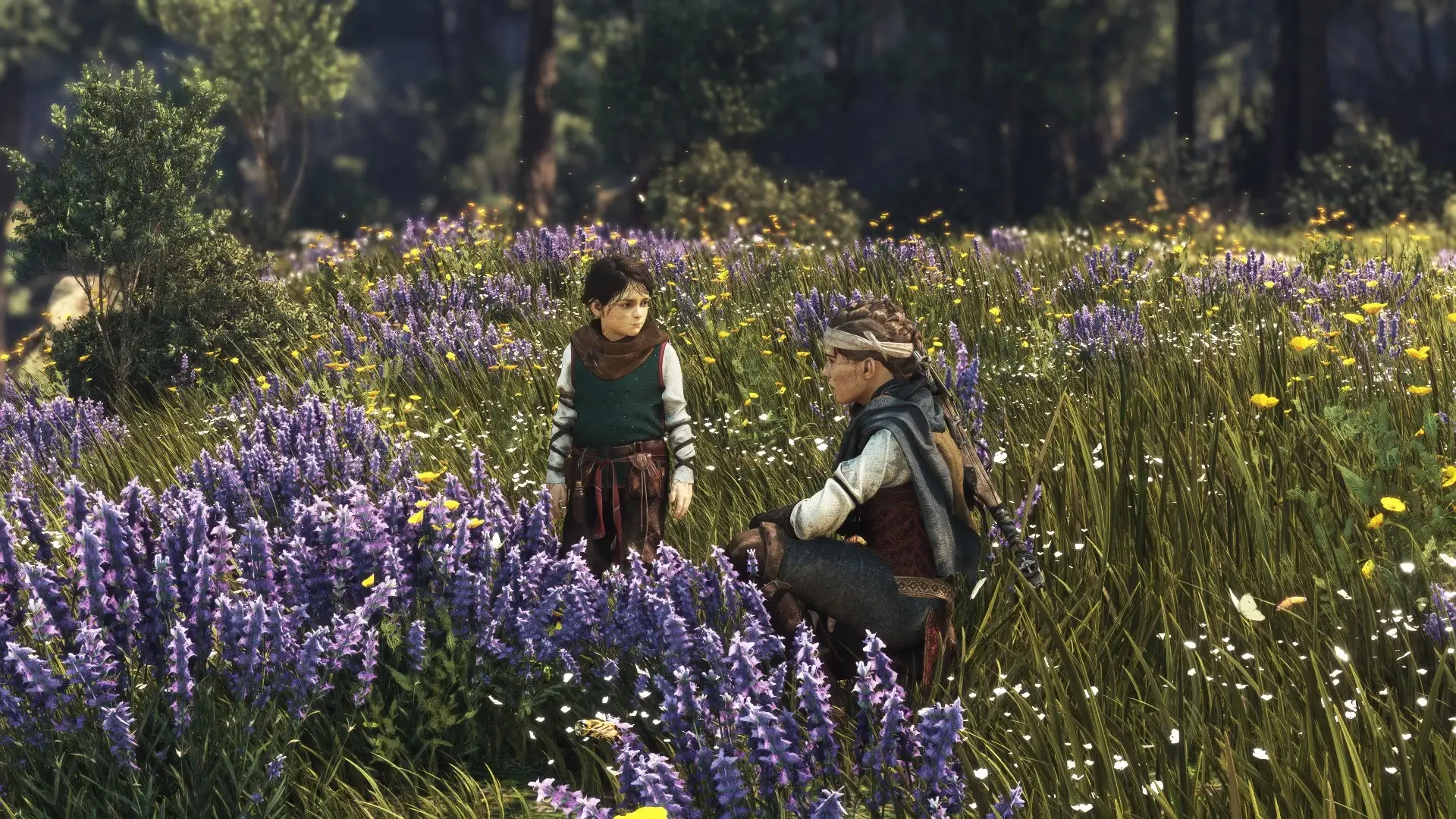
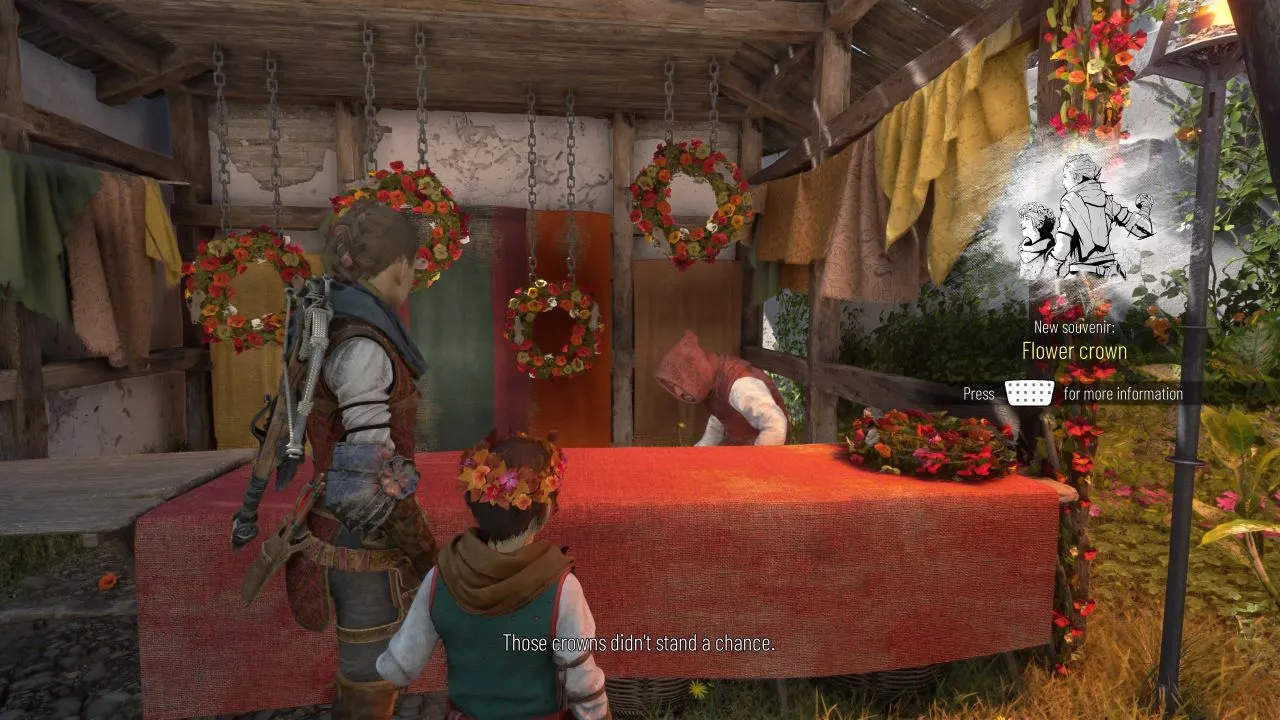
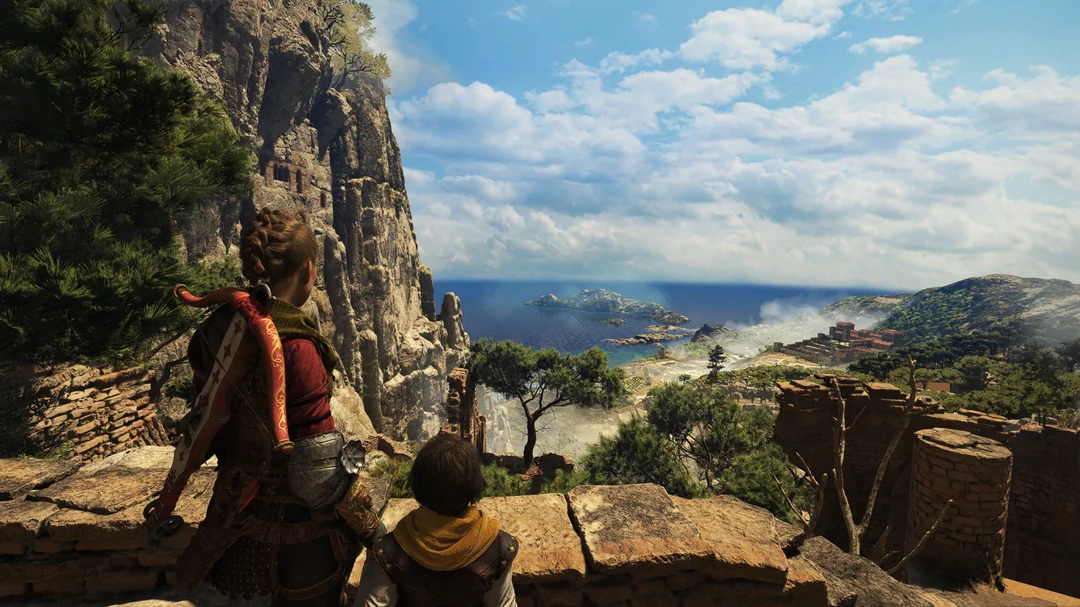
The exploration beat focuses on discovery and environmental interaction, using environmental storytelling and vistas to guide movement and create pacing breaks between tense sequences. Two good examples appear across the game. In Chapter 6, the beat relies on environmental storytelling through landmarks, collectibles, wildlife, and scenes of everyday medieval life inside the pilgrims' camp traveling to Rome for the Jubilee of 1350, with quieter moments between Amicia and Hugo reinforcing immersion and contrasting with the tension of later encounters. In Chapter 9, the island hub gives the player significantly more freedom to explore at their own pace before the narrative tightens again. Both chapters use exploration as a deliberate pacing tool, offering relief and discovery between high-intensity sequences.

FIGHT

This is the most recurring gameplay beat, combining encounters with soldiers and rat swarms inside spaces designed around two main approaches:

  • Stealth: Focused on observation, patience and resource management, where avoidance and risk evaluation remain central, as in Innocence.
  • Direct approach: Expanded in Requiem through tools like the crossbow and more open spaces, allowing more deliberate open combat.

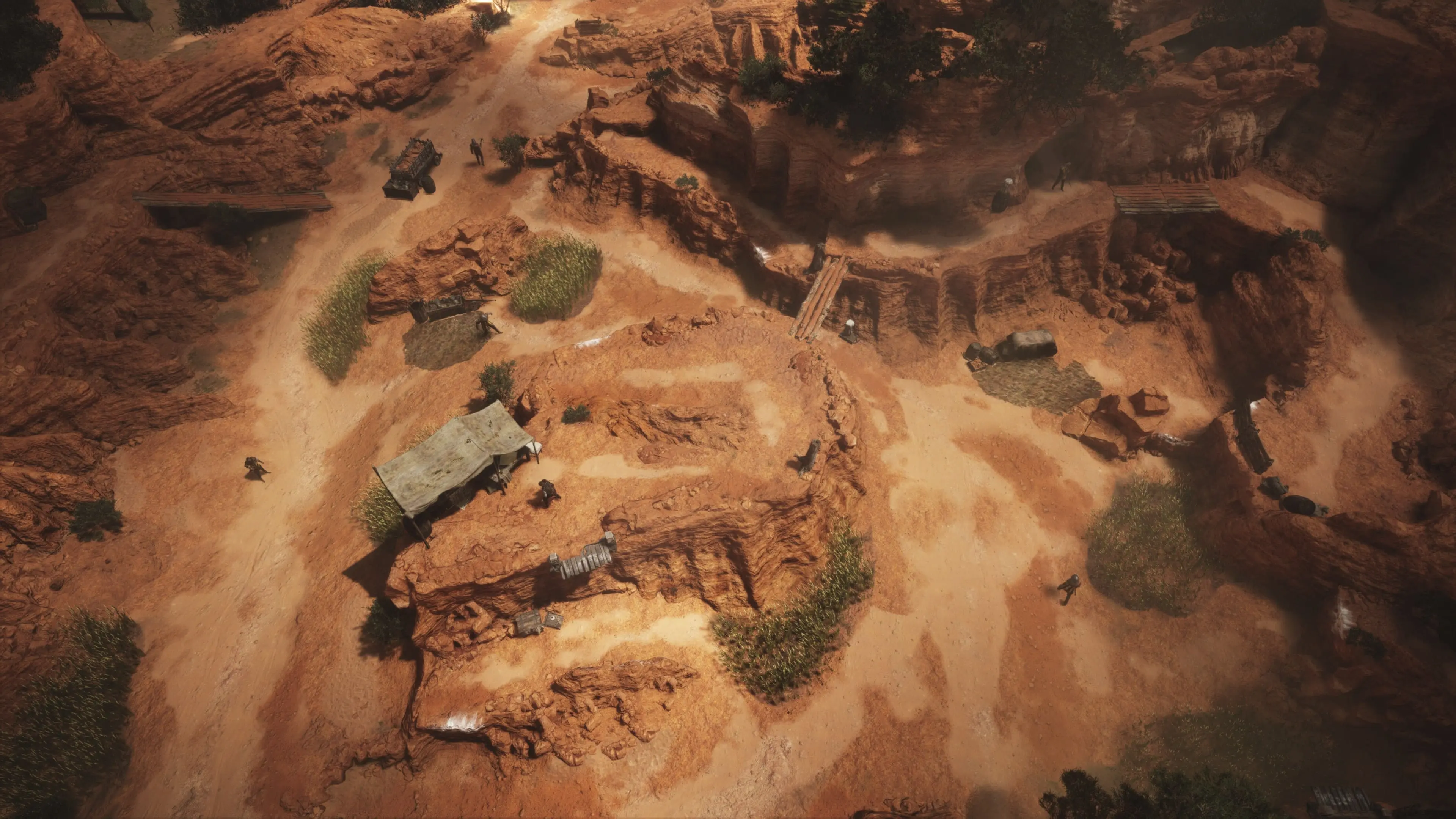
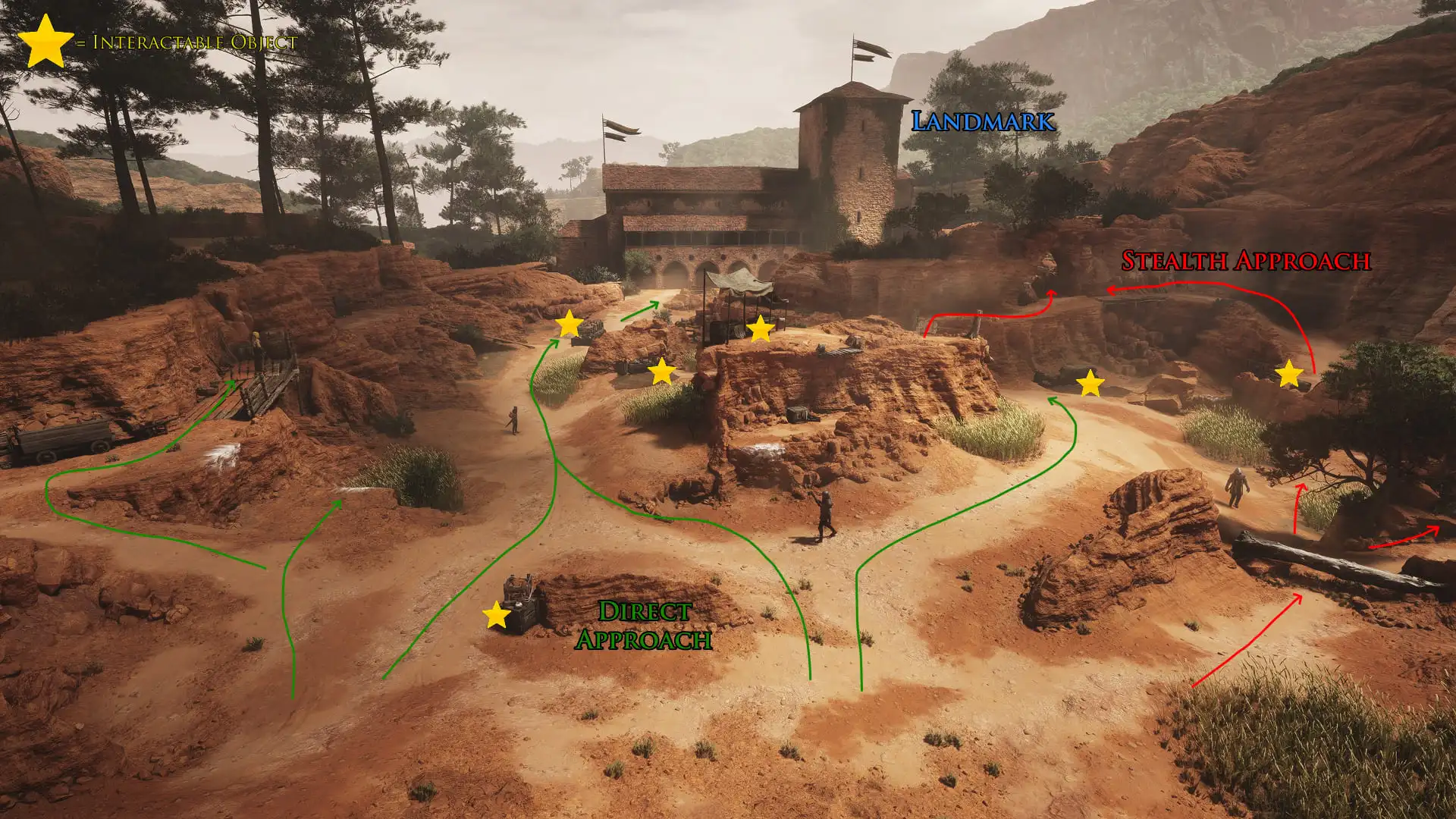
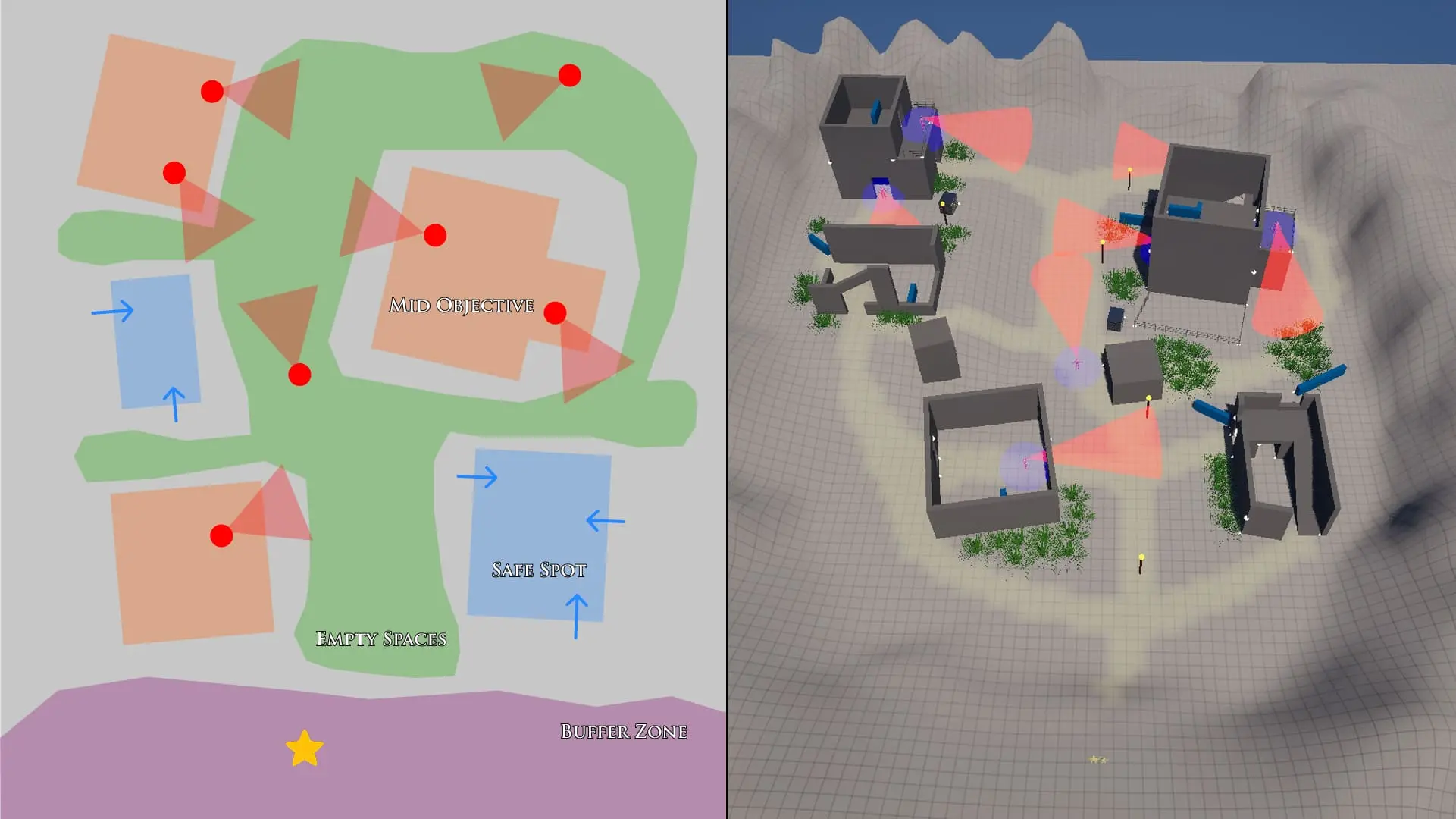
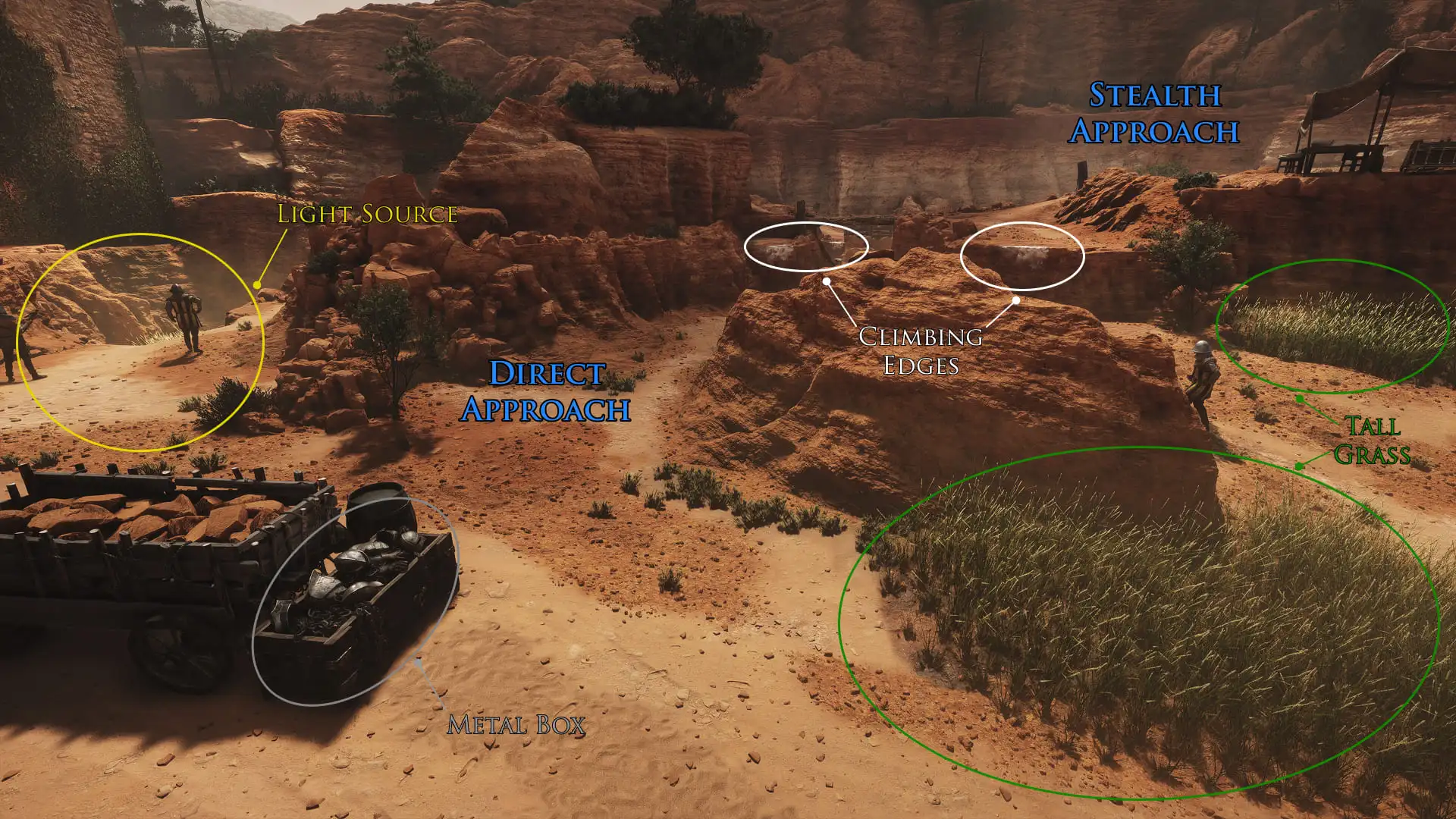
A good example appears in Chapter 6, where a landmark building establishes the player's next objective. Before entering combat, a buffer zone gives the player time to observe enemy patrols and plan an approach. The encounter is then divided into two distinct routes: a wide left path built for direct confrontation with long sightlines and stronger enemies, and a narrower right path focused on stealth through denser cover and safer traversal. At the center, a mid-objective structures the space and allows movement between both routes.

NARRATIVE

The narrative beat is delivered through cutscenes supported by gameplay and environmental storytelling, reinforcing the plot while deeply shaping the playerโ€™s emotional experience and immersion. One of the strongest examples appears in Chapter 12 with the death of Beatrice, a central moment in the story that dramatically shifts the tone of the game. Beyond its narrative importance, the scene directly impacts gameplay progression, as Hugo loses control and fully embraces the Macula afterward. This transition shows how narrative and gameplay are tightly connected in Requiem, with the cutscene not only advancing the story but also introducing the emotional and mechanical direction of the following gameplay sequences.

PUZZLE

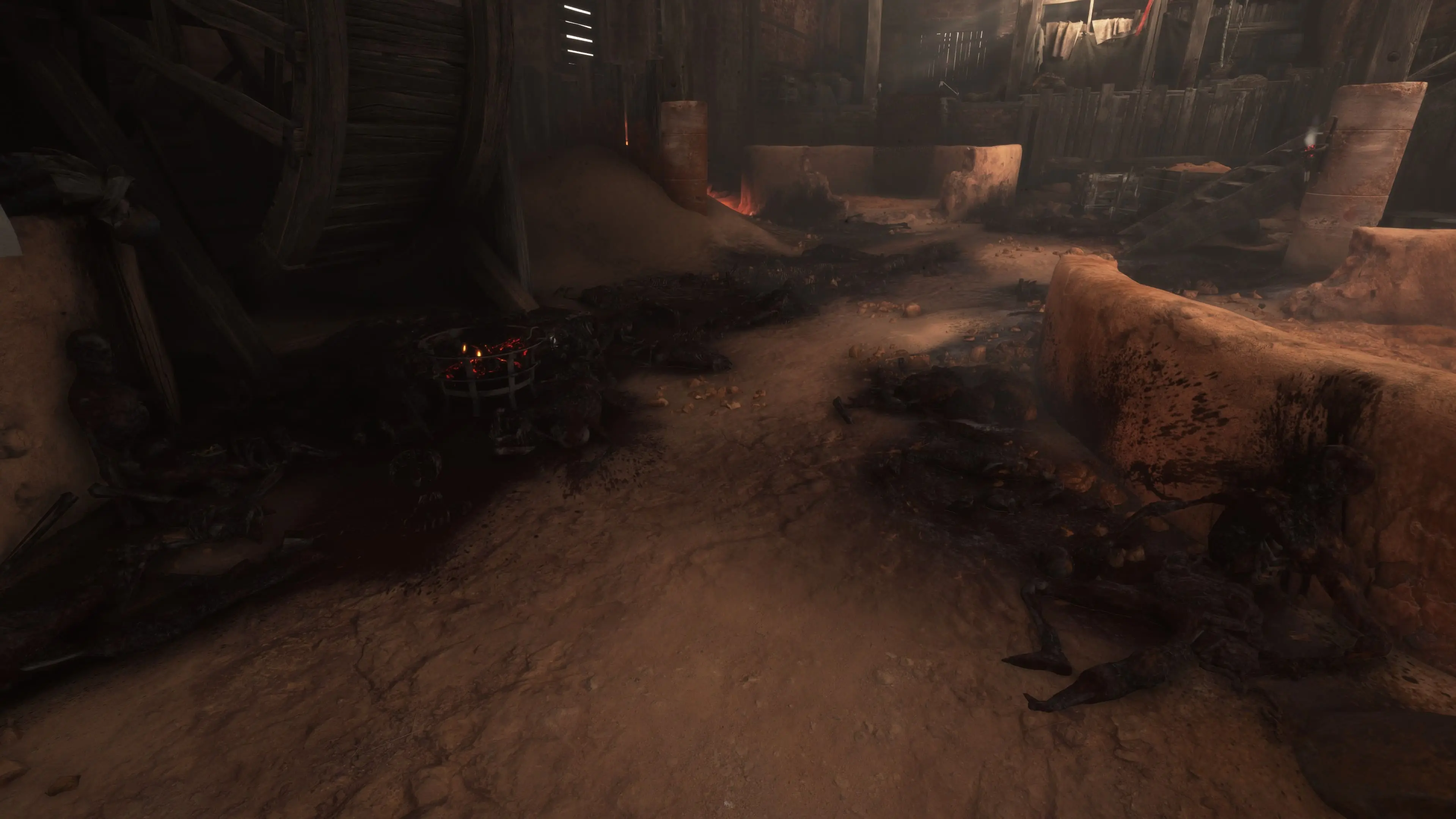
In Innocence, puzzles were linear and heavily guided, while in Requiem they are more open and interconnected, often allowing multiple solutions and non-linear progression while preserving challenge and readability. This approach is clearly demonstrated in Chapter 5, where Amicia and Lucas must cross an area overrun by rats using a rotating mechanism connected to movable fire sources that create safe paths. The puzzle is built around cooperation, requiring both characters to actively support each other throughout progression. Its circular layout encourages free problem-solving and exploration, while chained progression continuously unlocks new routes, tools, and interactions that lead to previously unreachable areas. During this sequence, the player also unlocks the pyrite mechanic, adding a new gameplay layer to the puzzle while reinforcing the sense of mechanical progression within the game.

CHASE

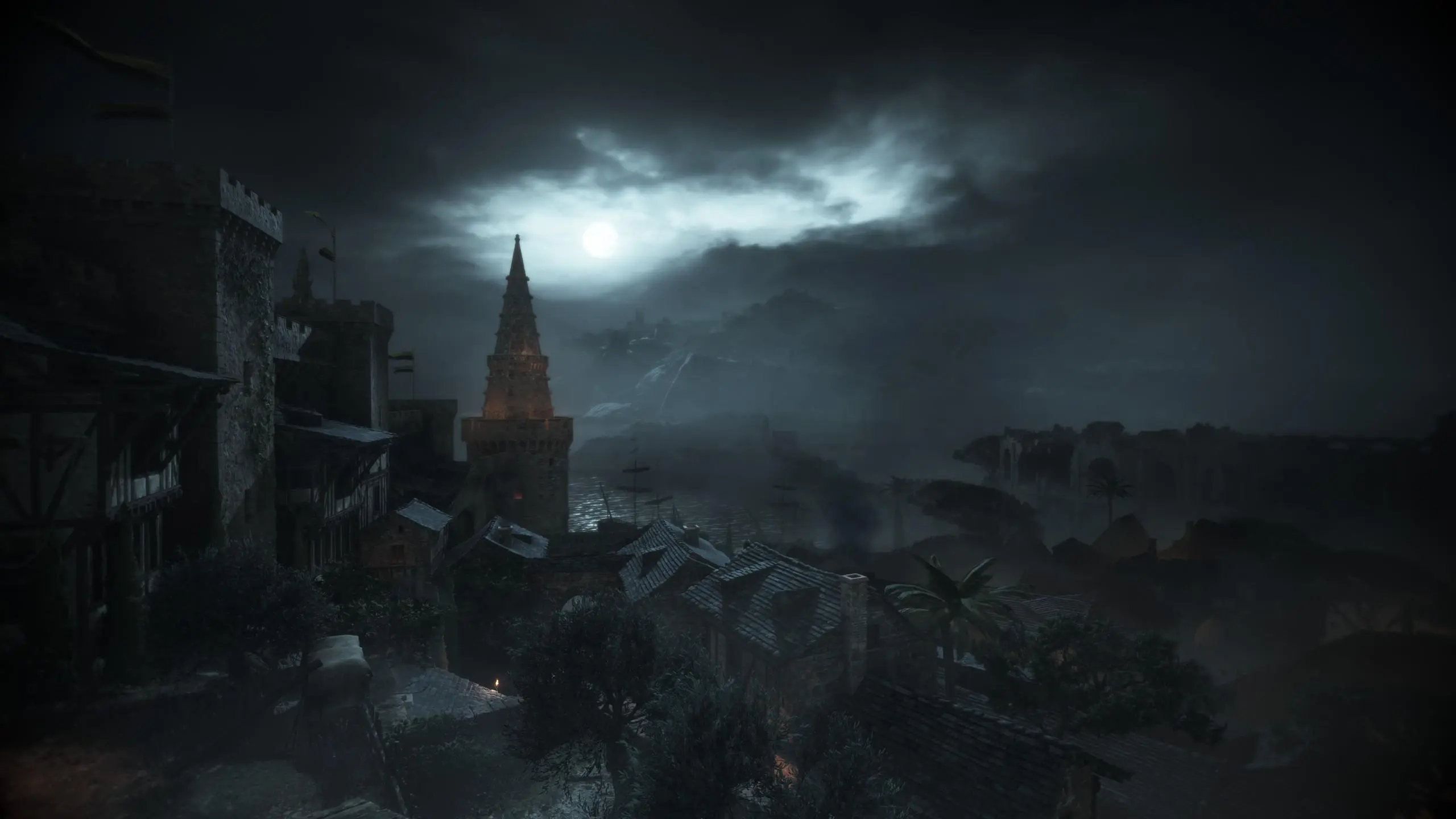
Chase beats are high-tension set pieces where the player is pursued by rats or soldiers, combining environmental hazards, scripted events, and strong cinematic direction to create urgency and constant movement. This is particularly evident in Chapter 4, when the Macula erupts through the city and unleashes a massive rat swarm. The sequence uses dynamic, seamless camera movement that never loses the player, often shifting perspective in front of Amicia to frame both her escape and the pursuing horde, while preserving a constant sense of exhaustion and chase. Lighting guides navigation through chaos, while level scripting continuously reshapes the path with collapsing structures and blocked routes. Movement is reinforced through environmental cues such as sound, light, and building silhouettes, all subtly indicating direction without breaking immersion. The result is one of the largest and most memorable set pieces in the series.

PACING

Requiem structures its pacing around a constant alternation between tension and relief, using the variety of its gameplay beats to control rhythm and prevent player fatigue. High-intensity sequences like fights and chases are consistently followed by quieter moments of exploration or narrative, giving the player time to reset and re-engage. Compared to Innocence, Requiem introduces longer and more articulated sequences, with more frequent breathing spaces that make high-tension moments feel more impactful by contrast. This rhythm is reinforced by the level design itself, where spatial compression builds anticipation and wider areas restore a sense of freedom and control.

Pacing graph โ€” beats and progression intensity

LEVEL STRUCTURE

Compared to Innocence, levels in Requiem are bigger, less linear, and structured as a sequence of interconnected sections that alternate different types of moments. Wide open areas designed for encounters alternate with narrower corridor-like sections focused on exploration and narrative. Rather than relying on prescribed solutions, encounters are built around interconnected tools and mechanics that players can combine creatively, encouraging experimentation and adaptation while maintaining readability and minimizing frustration.

The game introduces two hub areas, the city and the island, which act as recurring narrative spaces connecting chapters, reinforcing progression and the passage of time while concentrating key story moments along a central path. These hubs also serve to slow down the game's pace, offering quieter moments between major events and giving players greater freedom to explore, interact with the environment, and choose their own approach to progression.

Level objectives define each chapter's purpose and are often embedded as environmental landmarks, guiding the player naturally through the space and linking narrative and navigation.

Level structure overview

FIGHT

Encounter spaces are built around a clear spatial logic that supports both freedom and readability:

Fight encounter level structure โ€” Chapter 6 layout

ENVIRONMENTAL STORYTELLING

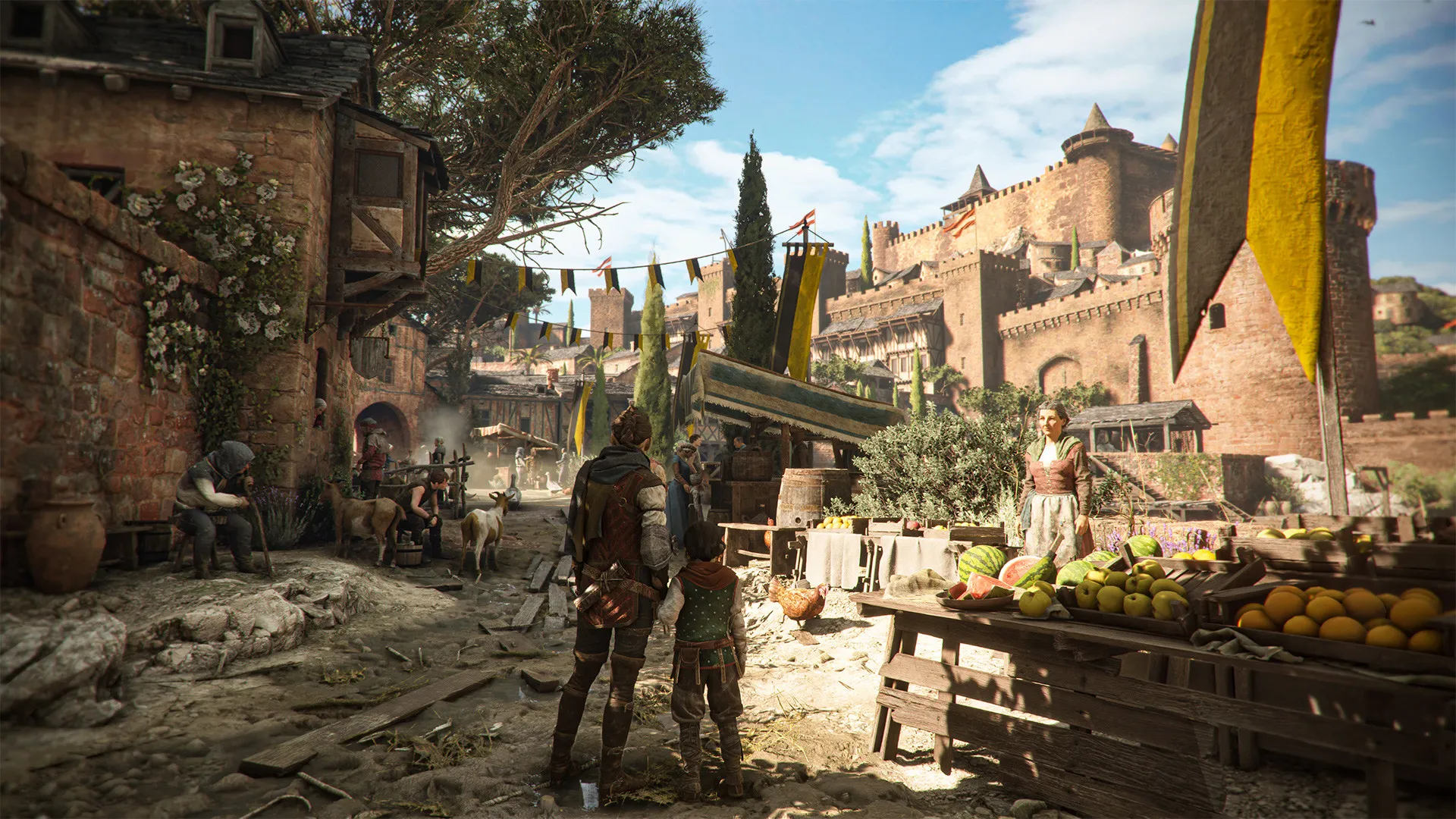
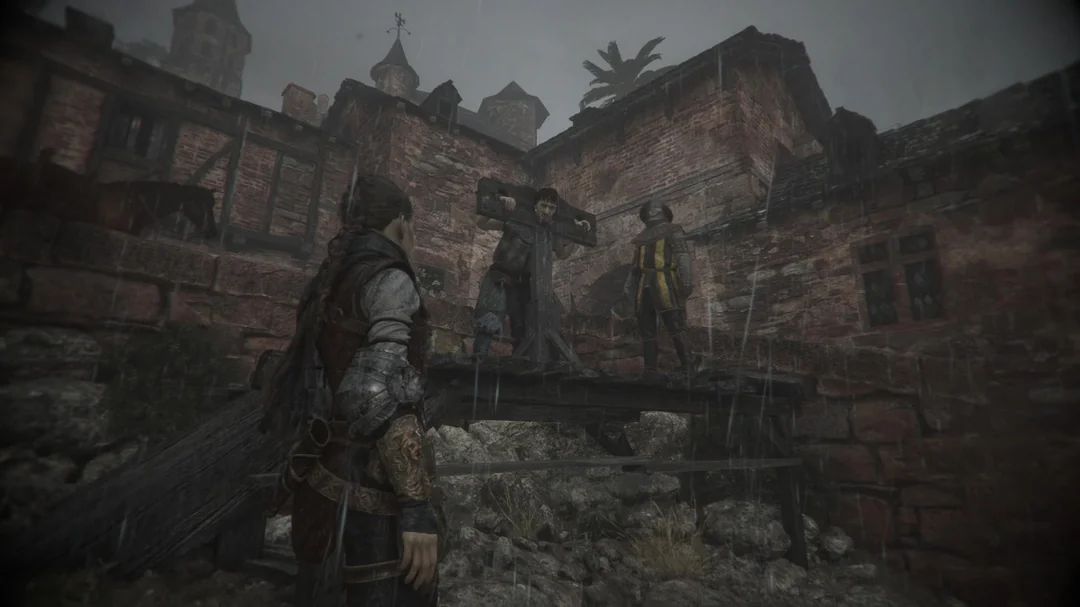
Environmental storytelling conveys narrative through spaces, objects, environmental details, and gameplay interactions rather than dialogue or text. In A Plague Tale: Requiem, it is used to express war, plague, and human suffering directly through the world, strengthening immersion and continuously delivering narrative context during exploration.

Storytelling is also reinforced through gameplay. The constant dynamic between Amicia and Hugo makes the player responsible not only for their own survival but also for guiding and protecting him, turning their relationship into an active gameplay system. Narrative meaning emerges directly from player actions, reinforcing the emotional weight of their bond through interaction rather than exposition.

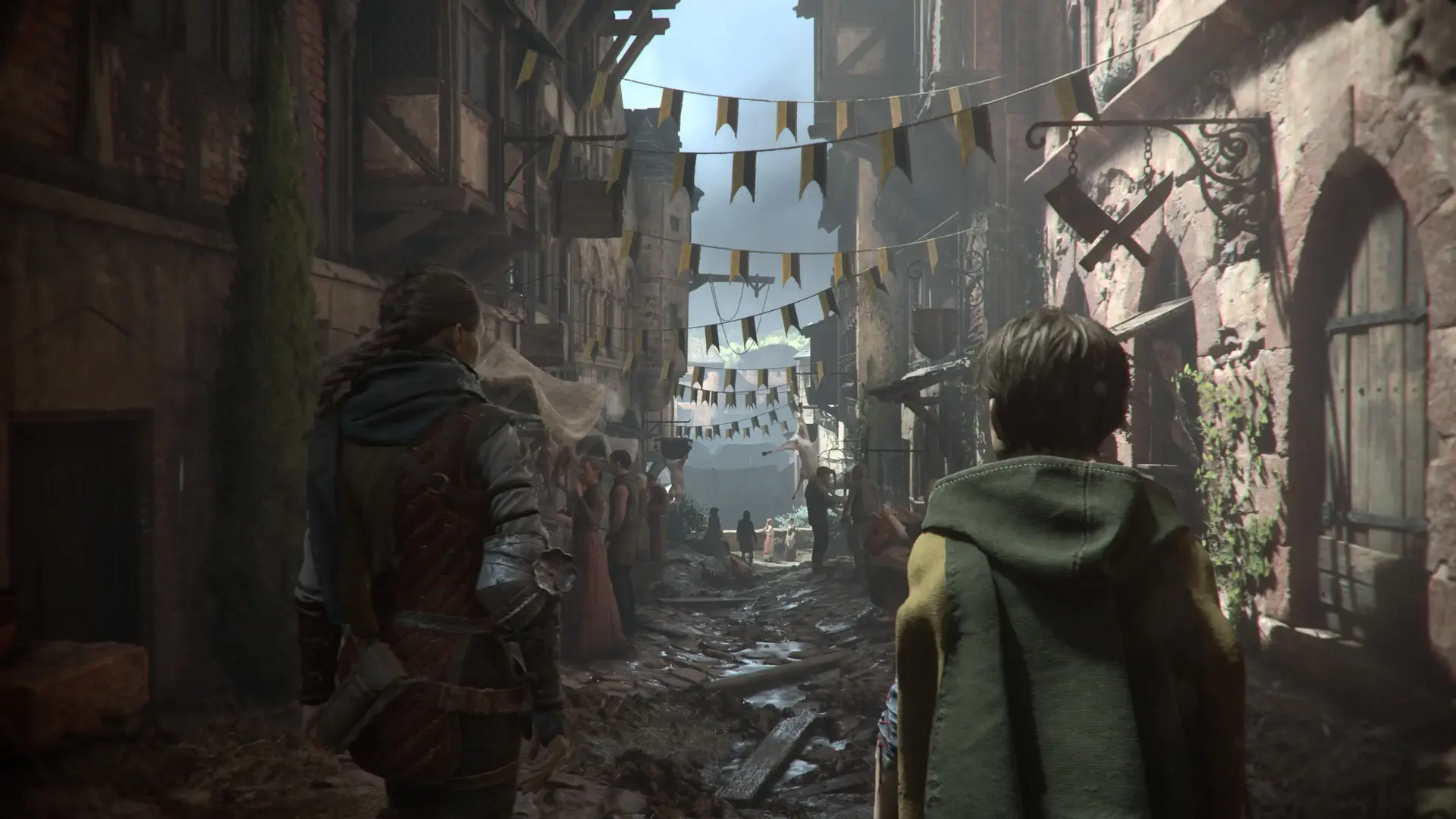
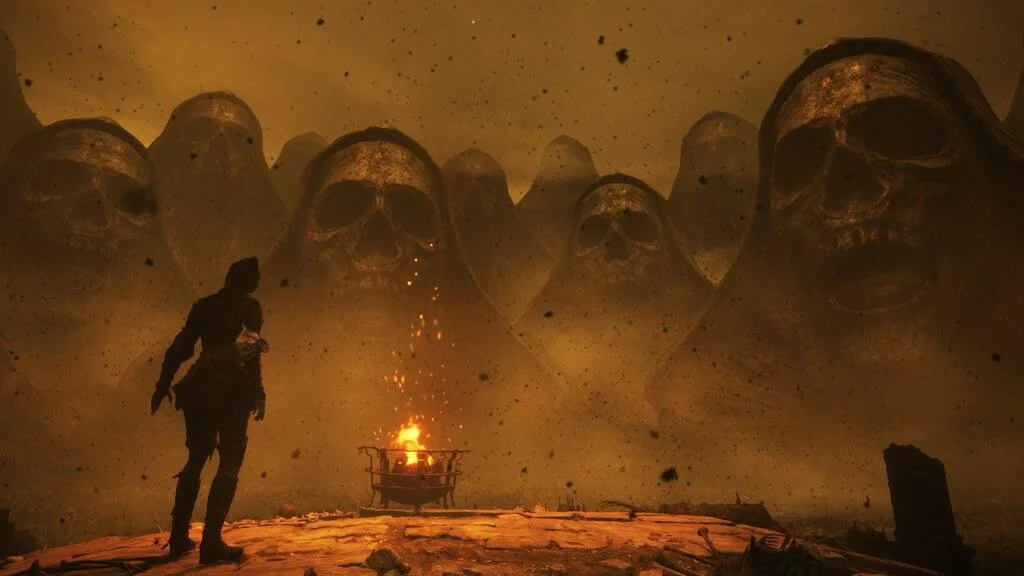
Across the game, the world is first presented as relatively lush and alive, progressively revealing darker and more oppressive layers that mirror Amicia's own psychological deterioration. The experience is consistently grounded in natural lighting, supporting tonal transitions between calm and brutality, with a visual direction strongly inspired by medieval Bordeaux and its surrounding regions.

The approach is clearly visible through both large-scale worldbuilding and smaller narrative details:

The world is also populated with smaller interactive narrative elements that reinforce character connection and exploration:

LEVEL DESIGN TECHNIQUES

A Plague Tale: Requiem has no map, compass or explicit HUD objectives, but still guides the player through environmental design. Composition, lighting, landmarks, and visual contrast naturally direct attention and movement, keeping navigation intuitive and fully integrated into the world. The main techniques used for player guidance are:

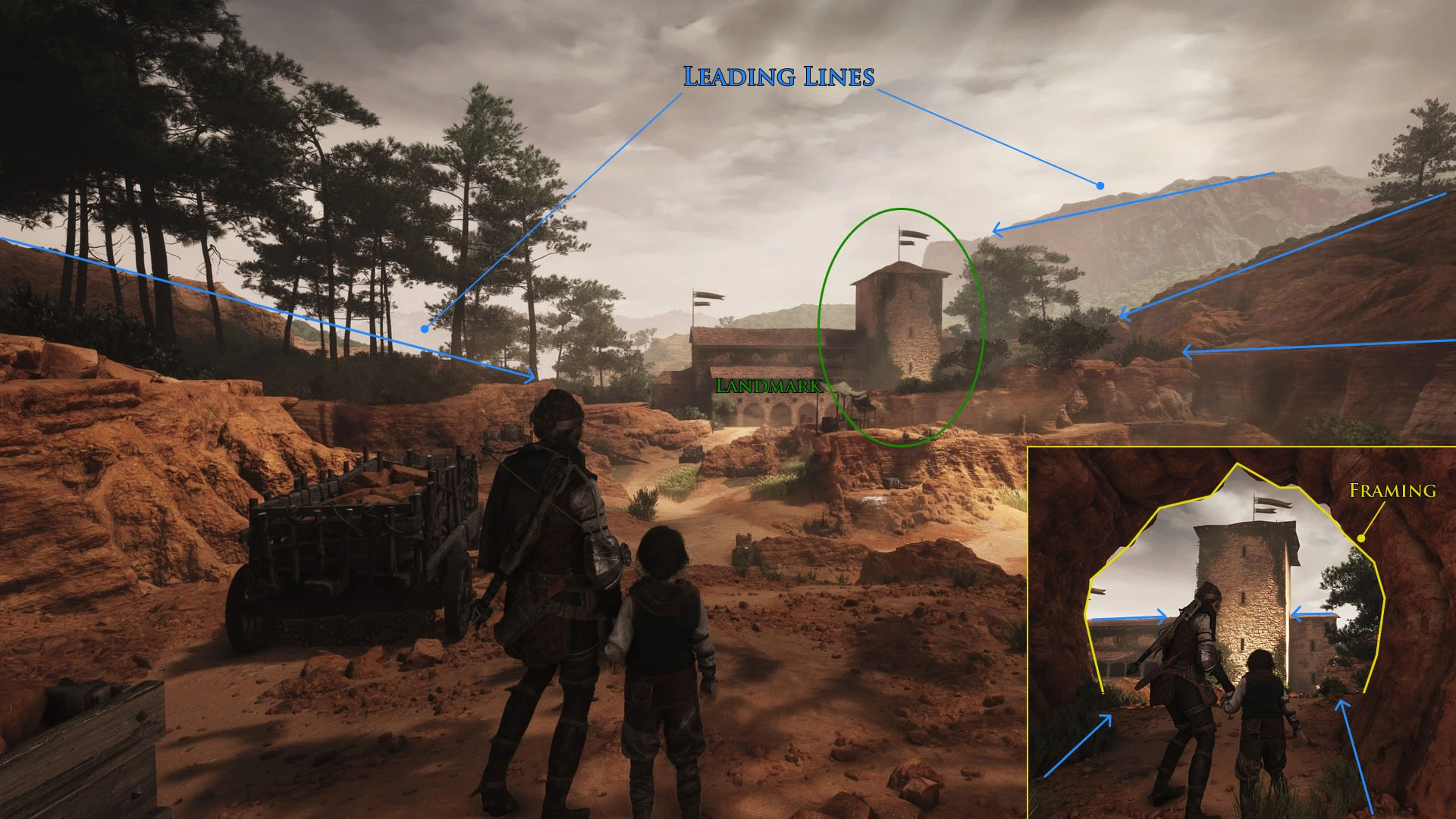
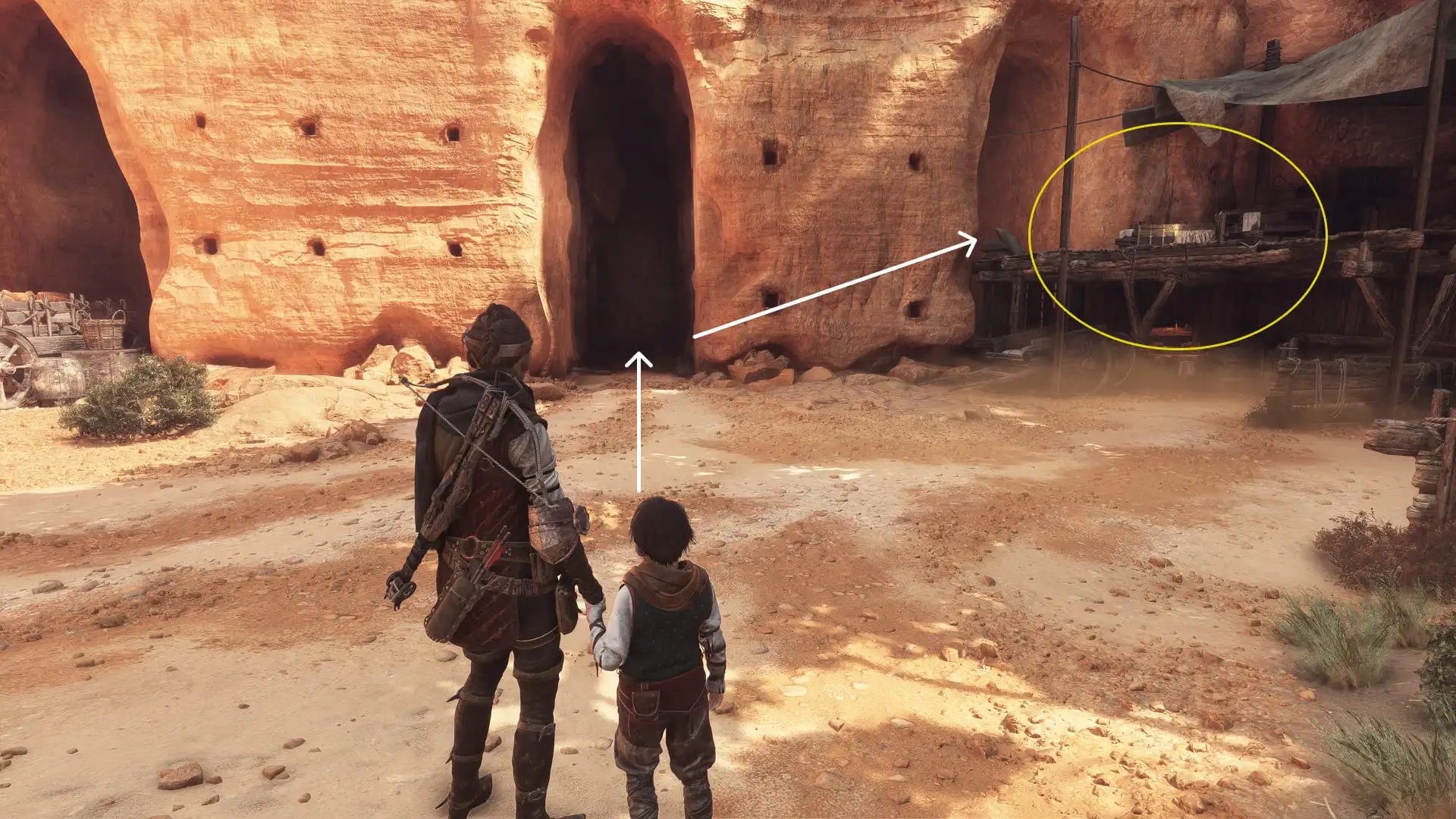
Framing and leading lines

Framing & Leading Lines

Architectural elements, natural forms, and environmental composition are used to direct the player's gaze toward objectives and points of interest. Doorways, pathways, tree lines, and ruins naturally frame the next destination, guiding navigation without explicit markers while reinforcing the visual coherence of the world.

Landmark guidance

Landmark

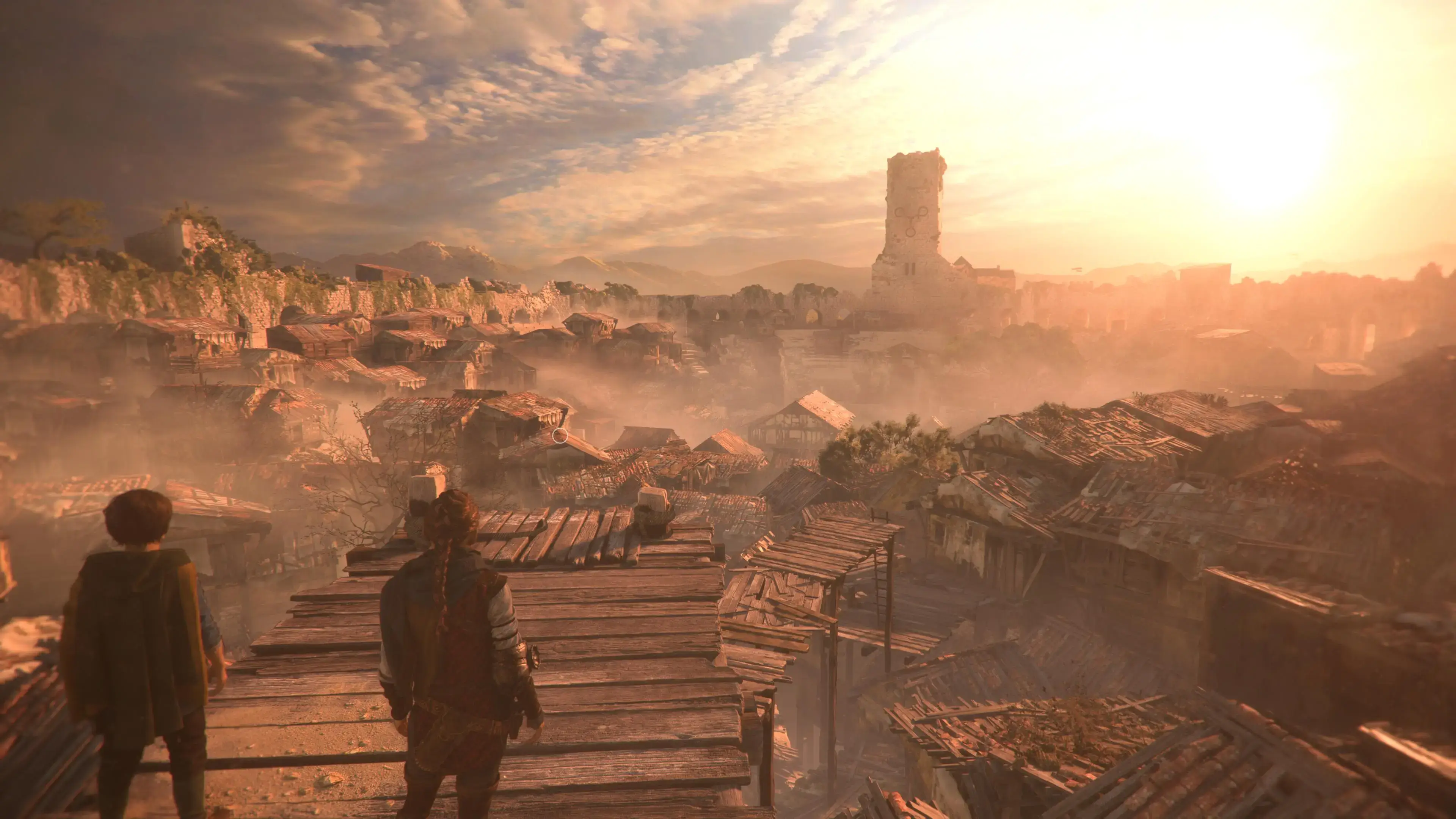
Distinctive environmental elements such as towers, large trees, or prominent buildings are used to orient the player within the space and establish clear navigation targets. In Chapter 2, a tall tower rising above the city skyline acts as a constant visual reference point, naturally drawing the player's attention and guiding exploration without the need for explicit markers.

Movement

Scripted movement is used to naturally direct the playerโ€™s attention toward the correct path. Enemies, rats, or environmental events often move toward important areas, subtly guiding navigation through motion and player instinct.

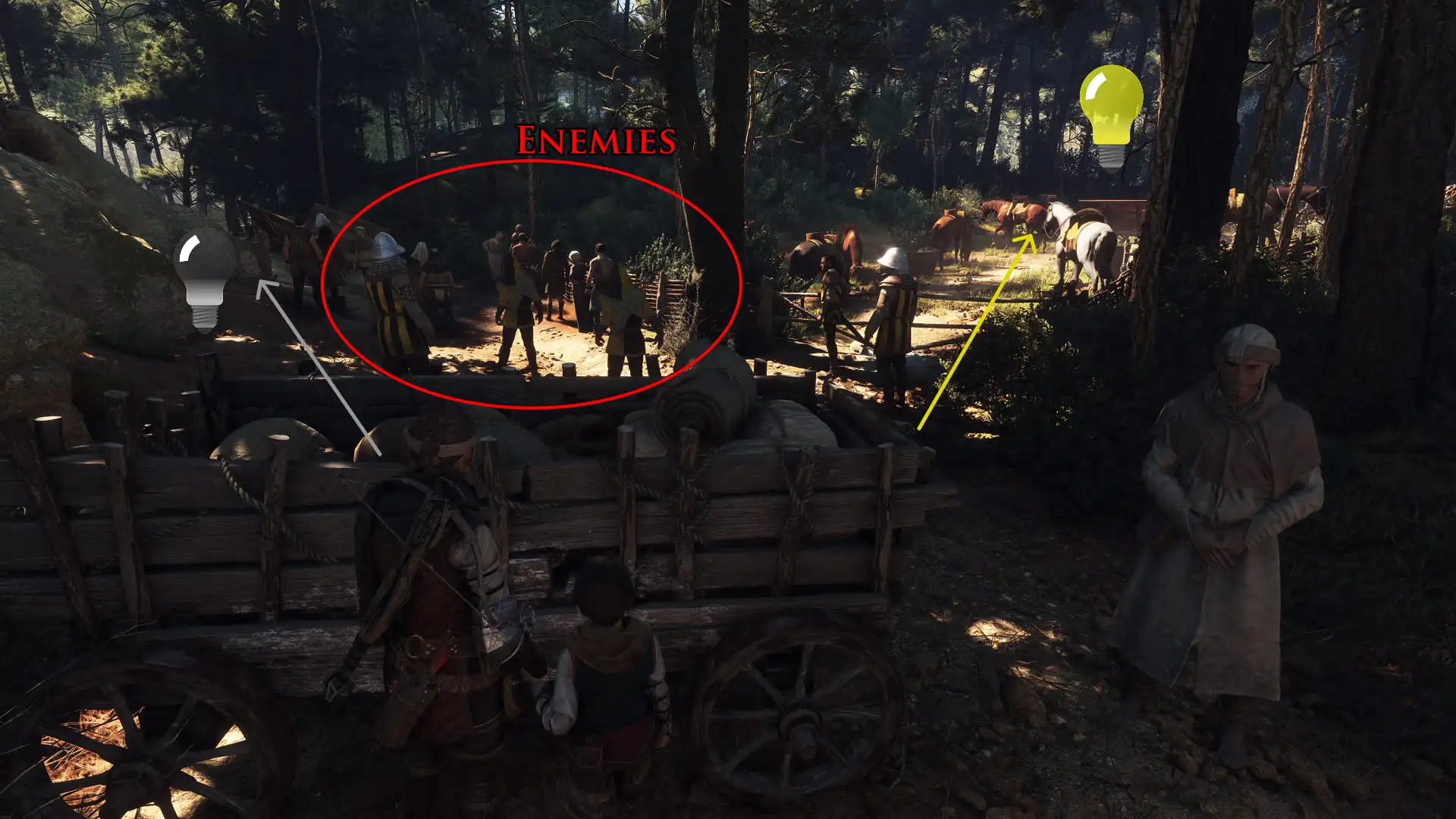
Lighting and breadcrumbs

Lighting & Breadcrumbs

Lighting is used to guide navigation, highlight safe paths, and communicate danger through visual contrast. In one encounter, the correct route is naturally emphasized by warm sunlight, while a darker path filled with enemies signals higher risk.

Funnel

Level spaces gradually narrow to guide the player from open exploration into more focused paths, directing movement toward key objectives. This is often followed by a release into wider areas or vistas, creating a sense of relief and pacing through contrast between compression and openness.

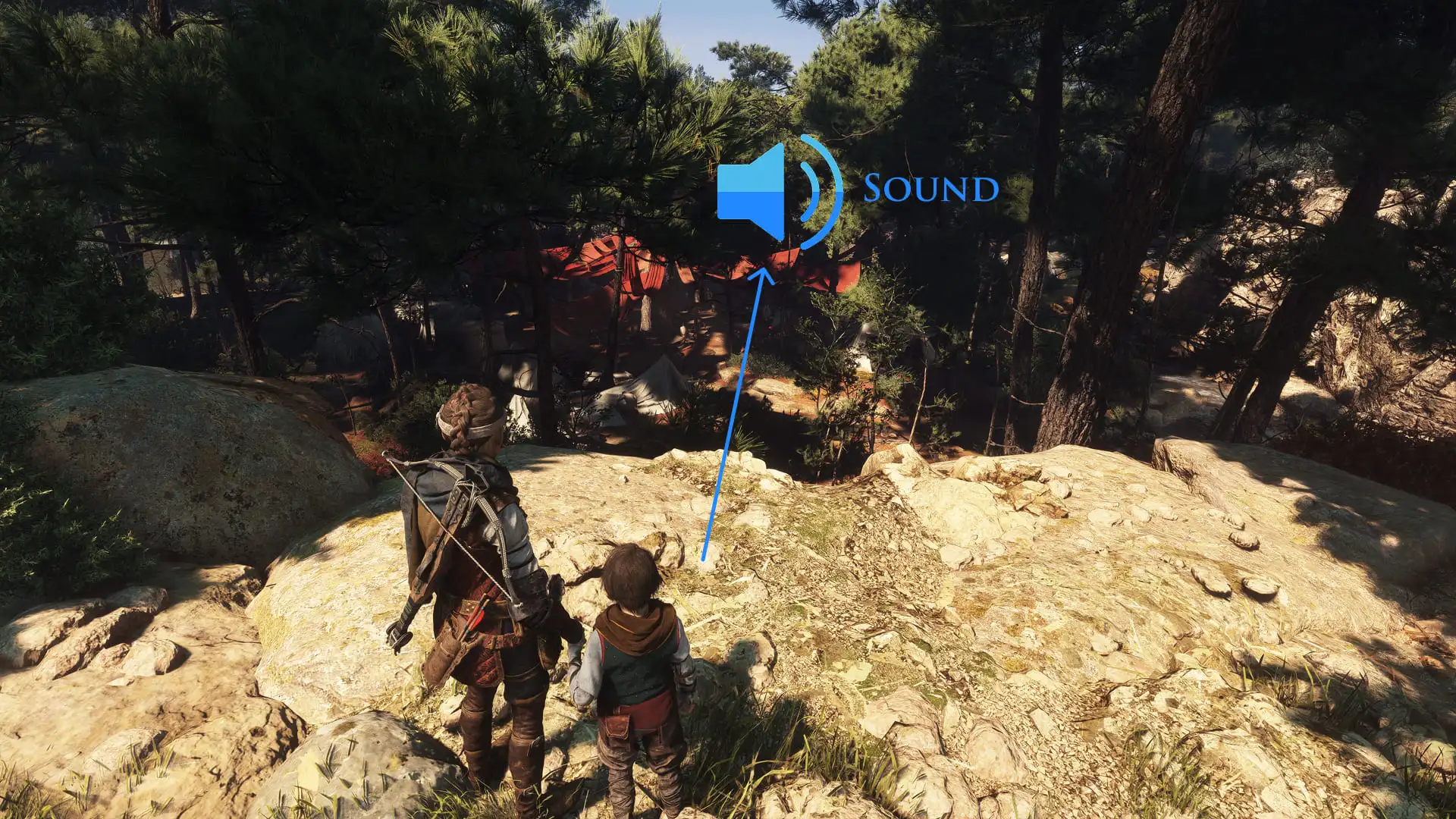
Sound cue guidance

Sound Cue

Audio is used as a subtle guidance tool to direct player attention and reinforce navigation without explicit markers. In Chapter 6, the distant chants of pilgrims naturally guide the player toward their camp, supporting exploration through sound alone.

Set Piece

Set pieces are large scripted sequences where gameplay, camera, and narrative combine to create high-impact moments. An example is the approach to the first Macula carrier, structured as a cinematic sequence that blends exploration, tension, and scripted events into a key narrative moment.

Anticipation guidance

Anticipation

Anticipation is used to prepare the player for future interactions by revealing important elements before they become accessible. A secondary object is shown in advance along the mandatory path, creating curiosity and mentally preparing the player for its later use or discovery.

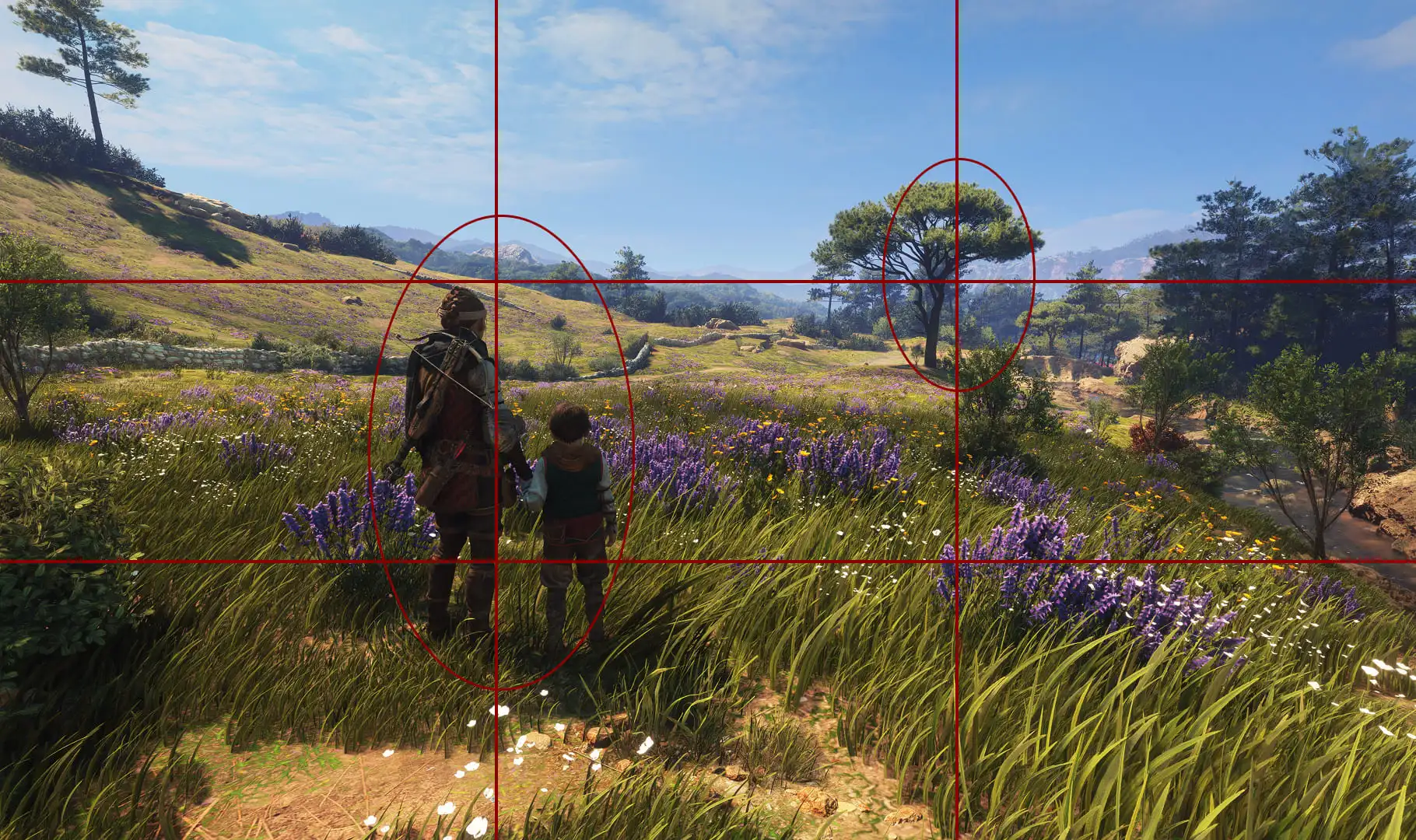
Rule of thirds composition

Rule Of Thirds

The composition frequently follows the rule of thirds to guide player attention and improve readability. The protagonists are often positioned along one imaginary vertical line, while important objects, landmarks, or points of interest are placed along the opposite line to create visual balance and focus.

AFFORDANCES

Affordances are visual and spatial cues that communicate possible player actions without explicit instruction. They guide movement, stealth, combat, and puzzle-solving through the environment itself, maintaining clarity and immersion. This is particularly significant in a game with minimal HUD or objective markers, where the environment itself must carry the full communicative weight that other games delegate to interface elements. The main affordances are:

  • Spaces: Large areas encourage direct approaches, while narrow spaces favor stealth.
  • Highlighted Climbing Edges: White-painted ledges indicate climbable surfaces.
  • Tall Grass: Signals stealth and hiding opportunities.
  • Light Sources: Guide navigation while supporting core gameplay systems.
  • Breakable Chains: Indicate destructible environmental interactions.
  • Metal Boxes: Attract attention and create distractions through sound.
Visual affordances for interactable elements

WHAT I WOULD HAVE CHANGED

While the game succeeds in many areas, there are a few design choices I would have approached differently.

Visual affordances for interactable elements

CONCLUSION

Analyzing this game has taught me many things that I will aim to apply in my future works. Among the most memorable:

  • How environmental storytelling conveys narrative through space and object placement, guiding the player's attention and shaping their emotional experience without words.
  • How to design layouts that seamlessly accommodate both stealth and direct approach, ensuring that spaces remain fully readable whether the player chooses patient observation or open combat.
  • How balancing player freedom and spatial clarity is not a single design choice, but a continuous effort that spans every encounter, space, and gameplay beat across the entire game.

As a design study, A Plague Tale: Requiem taught me that these 3 goals are not opposing forces, but that keeping them in tension productively is one of the hardest and most important challenges in level design.